
The moment you book a cruise, the offers start. Drink packages, dining packages, Wi-Fi, photos, cabanas, spa treatments, priority boarding. Each one is presented as a limited-time deal, and each one adds to the total.
After more than 50 cruises with my kids at every age and stage, I’ve bought almost all of these cruise ship amenities at one time or another. Some paid for themselves many times over. Some I regretted. And a few I regretted not buying.
Here’s my short answer, followed by the reasoning and the math.
Cruise Ship Amenities: The Short Answer
Almost always worth it for families:
- Wi-Fi. Buy some version of it. It will make your life easier.
- Specialty dining, in moderation. For those who enjoy fine dining, a multi-night package for the adults and one or two kid-friendly dinners with the whole family. (If you view dining out as more of a social experience than a food experience, you can skip it.)
- Independent shore excursions in tourist-friendly ports. You can save a lot compared with what the cruise line offers.
Worth it only if the numbers work for your family:
- Drink packages and soda packages
- Photo packages (digital often offers more value)
- Arcade cards, go-karts, and other onboard upcharges
- Private-island extras like cabanas (when on sale)
- Spa services and thermal suite passes
Pre-book or risk being shut out:
- New, iconic, limited-capacity attractions
The big splurge that can potentially change the math:
- A suite, which can bundle several of the extras above. If you’re choosing between a higher-level suite and a paid perk package like Royal Caribbean‘s The Key, I’d put the money toward the suite.
How Cruise Line Pricing Really Works
How you buy matters almost as much as what you buy. Four things to know.
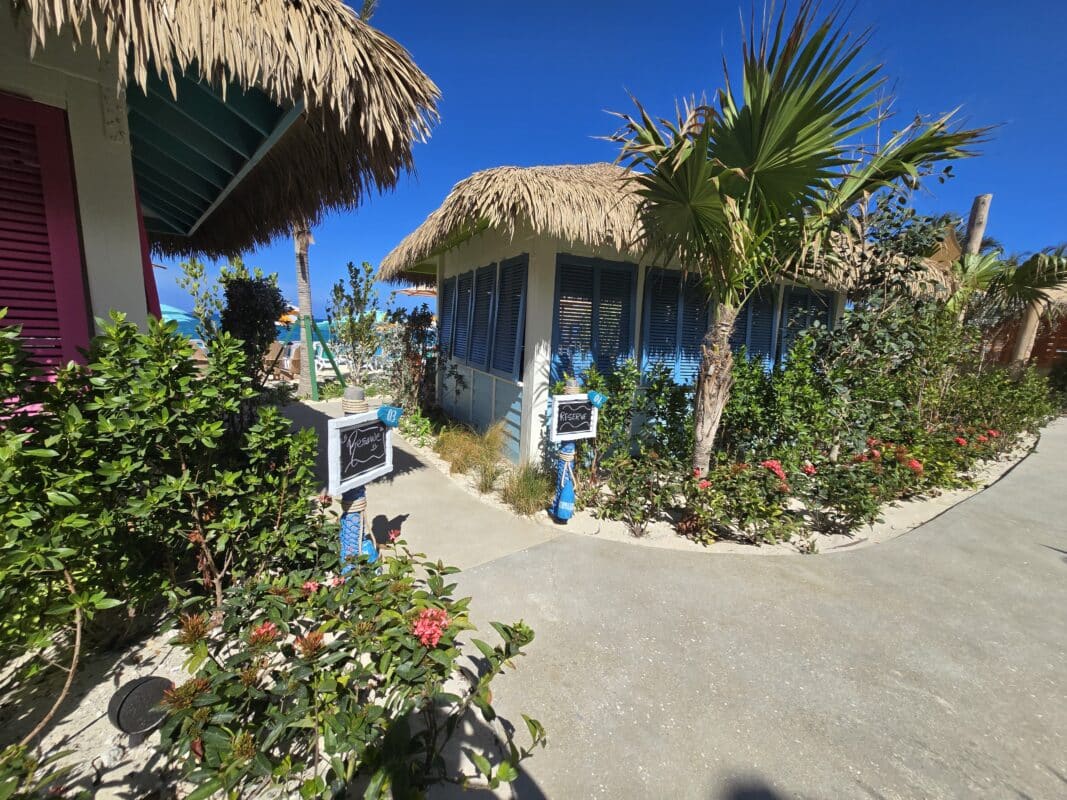
1. Prices move. Royal Caribbean uses dynamic pricing for many of its add-ons, so the same drink package, Wi-Fi plan, or cabana can cost different amounts on different ships and sail dates, and the price on your own sailing can change from week to week. One example from 2024: an Overwater Cabana at Perfect Day at CocoCay cost $958 on a May sailing of Freedom of the Seas and $4,999 (sold out) on a June sailing of Icon of the Seas. Other lines, including Norwegian and MSC, also use variable pricing for some extras.
Not every cruise line handles pricing the same way. Carnival’s CHEERS! beverage package, for instance, currently has published rates of $83.94 per person per day when purchased before departure and $89.94 onboard, including the 20% service charge.
Check how your line prices things before you assume today’s price is the price you’ll see next month.
2. Read the refund policy, then use it. On Royal Caribbean, many Cruise Planner purchases are fully refundable up to two days before sailing. That makes a useful strategy possible: buy what you want early, then check back periodically. If the price drops, cancel and rebook at the lower price. The cruise line won’t do this for you; you have to catch it yourself. (Cancel after you’re onboard and the refund comes back as onboard credit, not to your card.) But cancellation deadlines vary by product, particularly for specialty dining and shore excursions.
Norwegian also permits full refunds to the original payment card for eligible prepaid reservations canceled at least 24 hours before sailing, with additional restrictions for certain activities. Other lines have their own rules.
Before relying on the cancel-and-rebook strategy, check the terms for the specific item you’re purchasing.
3. Assume the best sales land around Black Friday. Historically, some of the best sales promotions occur around Black Friday. Royal Caribbean‘s 2025 Black Friday sale advertised up to 50% off beverage packages, with the Deluxe package as low as $46.99 per person per day on select sailings (onboard pricing regularly tops $100). The Classic Soda Package was 35% to 40% off. If you’ve already bought, a Black Friday sale is exactly when the cancel-and-rebook strategy pays off.
4. You can shop much earlier than you probably think you can. When I started cruising, the pre-cruise shopping portal (whatever the line called it) didn’t open until close to final payment. Now, you can often start shopping for cruise extras much earlier than you might expect. On Royal Caribbean, there’s no fixed schedule, but shore excursions often show up in the Cruise Planner around six months before sailing, and sometimes earlier. Other lines open reservations on different schedules, sometimes several months before departure. Norwegian, for example, often opens specialty dining reservations 120 days before sailing and shore excursions 60 days before.
Not everything opens at the same time, even on the same cruise. Check your reservation portal early, particularly if there’s an excursion or specialty restaurant you’re determined not to miss.
One more thing: the gratuity on top. Many extras carry an automatic service charge that isn’t in the headline price. Drink packages, dining packages, and spa treatments are the usual suspects. Do the math with the service charge included.
Wi-Fi: Just Buy It (Strategically)
We always buy Wi-Fi. If your kids have phones or tablets, you’ll face a mutiny if you try to skip it.
But the bigger reason is practical. With Wi-Fi, you can use messaging apps like WhatsApp to keep track of each other onboard. On a ship with thousands of passengers, being able to text “we’re at the pool deck, aft” is a big part of the value. (More on the setup in my guide to cruise ship Wi-Fi, texting, and cell phones.)
The strategy part is the pricing structure. On Royal Caribbean, one package covering four devices costs less than four separate single-device packages. One 2026 example on Utopia of the Seas put a four-device bundle at roughly $14.50 per device per day, compared with $23.99 per day for an individual package. Prices vary by ship and sailing, but the pattern holds: price the multi-device option before you buy per person.

Some cruise lines offer free messaging through their onboard apps, so you may not need to purchase Wi-Fi just to keep in touch. But check the age restrictions. Several cruise lines limit access to their messaging features to teenagers and adults. Disney is a notable exception, allowing younger children to use its onboard chat with parental authorization. If your kids are too young to use the cruise line’s messaging feature, you’ll need another way to communicate.
Bottom line: Buy it, buy it before you board, and buy the bundle.
Specialty Dining: A Package for the Adults, a Night or Two for the Kids
We now eat in specialty restaurants often, and our pattern has settled into something that works: a three-dinner package for the adults, plus one or two specialty dinners with the kids.
On Royal Caribbean, the 3-Night Dining Package runs roughly $95 to $150 per person before the 18% service charge, priced dynamically. That’s often a better fit than an unlimited package, especially on shorter sailings, when you’d rather not give up the main dining room every night.
For the family dinners, pick the kids’ favorites. My kids love hibachi on Royal Caribbean. Other great family choices are the ones that work like dinner and a show. The Royal Railway experience (on Utopia of the Seas and the new Icon-class Legend of the Seas) is a good example. Those are a lot of fun, but a bit on the pricier side. Keep in mind that some of these venues carry a surcharge even with a dining package.
Check the kids’ pricing before booking. Many cruise lines offer free or discounted specialty dining for younger children, but the rules vary. Norwegian allows children 12 and under to eat free from the kids’ menu at specialty restaurants (dinner-and-a-show events excluded), while Princess generally charges half price for ages 3 to 11. Celebrity lets children five and under dine free and charges $14.99 for ages 6 to 12. Carnival and MSC also offer reduced children’s-menu pricing.
The important catch is that discounted prices often apply only when children order from the kids’ menu. If your child wants the steak, lobster, or hibachi experience the adults are having, you may pay more. And some premium dining experiences have their own pricing rules.
Some experiences are for the adults only. We’ve done some version of the chef’s table many times and several of the newer, pricier experiences. I have never taken the kids to the chef’s table, and I wouldn’t bring them to the high-end supper clubs. A three-hour tasting menu is a lot to ask of most kids, and a lot of money to spend finding that out. (If you’re curious, here’s what the chef’s table is actually like.)
Suite restaurants are a nice-to-have. If you’re in a suite, you may have access to a private restaurant with a more upscale menu and service included in the price. It’s lovely. Some higher-level suites may also include additional specialty dining privileges.
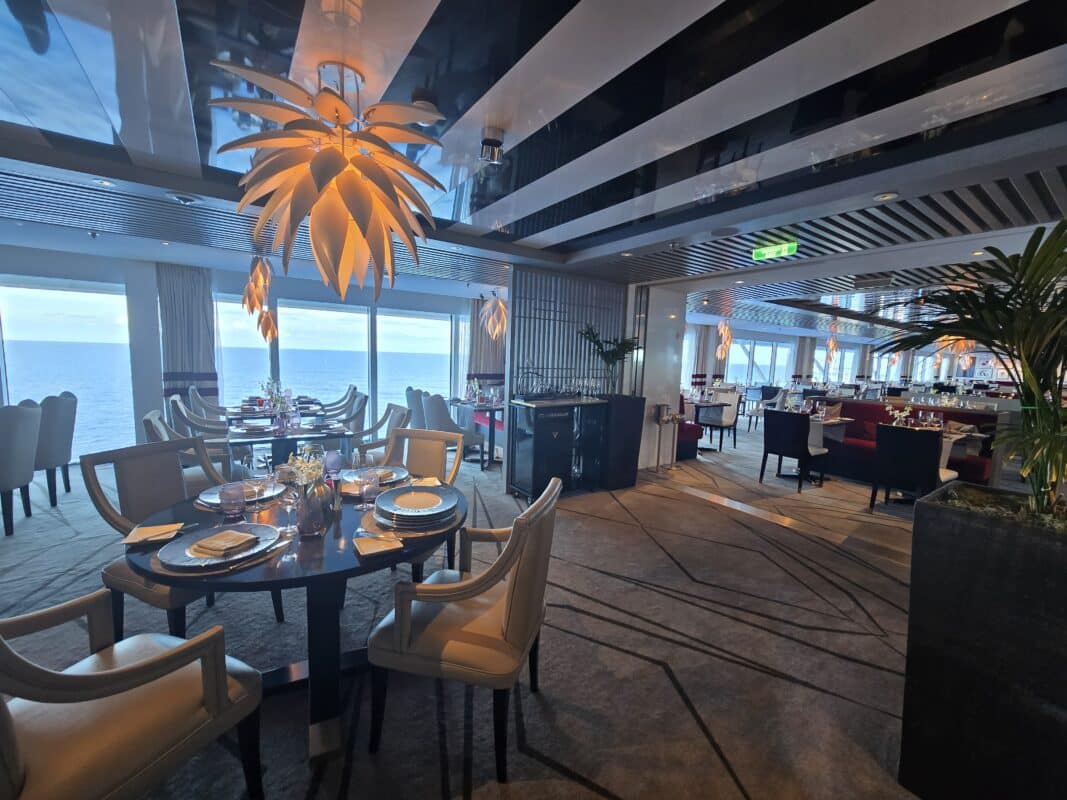
Bottom line: If specialty dining is part of how your family enjoys a cruise, buy a multi-night package for the adults before you sail, and choose the kids’ nights for fun, not for fine dining.
Shore Excursions: Go Independent, Except When Safety or Time Management Are Concerns
Shore excursions are usually the largest add-on expense on a family cruise, and this is where I’ve saved the most money.
In tourist-friendly ports, I’m a big fan of booking through independent operators and platforms like Viator, Shore Excursions Group, or GetYourGuide. The savings can be substantial. On a 14-night cruise to India, our travel party of seven (four adults and three kids) compared quotes and booked private tours with one reputable operator in all three ports:
| Port | Our independent tour | Cruise line’s version |
|---|---|---|
| Cochin (backwaters) | about $575, private houseboat | $802.25 motorboat / $1,266.25 houseboat |
| Goa | about $523 | $568.25 |
| Mumbai | about $597, lunch included | $899.25 |
That’s roughly $575 to $1,040 saved, depending on which Cochin option you compare against. We also got a private air-conditioned minibus, our own English-speaking guide, and the freedom to stop for souvenirs, ATMs, and bathroom breaks whenever we needed. On the backwaters, the captain let the kids steer the boat. Those prices date from 2017, so treat them as an illustration of the gap, not a current quote. The full story is in my post on affordable family shore excursions.
On a Mediterranean cruise, the best excursion of the whole trip came from a small company we found on TripAdvisor. They built a custom itinerary, arranged advance tickets so we skipped the lines, and provided car seats.
When the official excursion makes the most sense: On a recent cruise that stopped at Le Havre, there were plenty of options to get to Paris, a 2.5- to 3-hour ride each way. We could have found something more economical, and probably more comfortable. We booked the cruise line’s bus anyway, because we absolutely didn’t want to risk missing the ship.
That’s the real value of a ship-sponsored tour. Major cruise lines guarantee that if one of their organized shore excursions runs late, the ship will wait. If the delay is so substantial that the ship cannot wait, lines such as Royal Caribbean and Disney promise to arrange transportation so passengers can rejoin the ship at no additional expense.
That protection doesn’t extend to independent excursions. If your private tour gets stuck in traffic and you miss the ship, you’re generally responsible for getting back.
Extremely rare cases have occurred of a ship leaving without guests from its own tours, but those were mistakes, not policy.
Bottom line: Go independent in walkable, tourist-friendly ports and where a reputable operator offers a return-to-ship guarantee. Book with the ship when the destination is far from the pier and a traffic jam could strand you. (My posts on independent vs. official excursions and common excursion mistakes go deeper.)
Drink Packages: Run the Numbers on the Package You’re Actually Offered
Drink packages are the most heavily marketed extra, and the one where generic advice is least useful. The break-even point depends on the price offered for your specific sailing, and on lines with some version of dynamic pricing, that price can be a moving target.
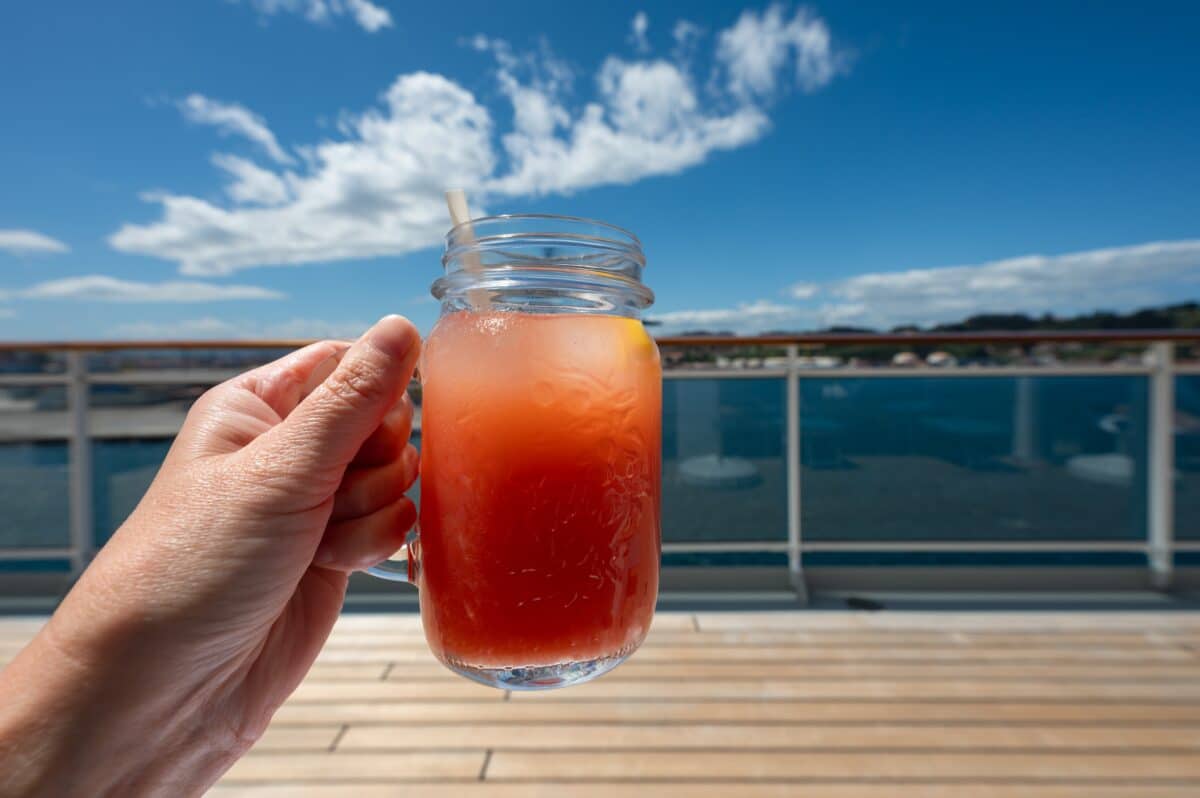
So do the calculation with the real number. Say your sailing’s Deluxe package is $70 per person per day. Add the 18% service charge and you’re at $82.60. If a cocktail costs $14 plus the same 18% (about $16.52), you need five cocktails a day, every day, including port days, just to break even. In my experience, even with the best deals you usually need to drink at least five to six drinks per day for a package to pay off.
Two rules make the math harder:
- Everyone of drinking age in the cabin usually has to buy it. On Royal Caribbean, if one adult buys the Deluxe package, every guest of legal drinking age in the stateroom must as well. Carnival has the same rule for CHEERS!.
- Packages have exclusions. For instance, minibar drinks or room service drinks are typically excluded. And, some packages may only cover certain brands.
My detailed calculators are in the Royal Caribbean drink package breakdown, along with reasons to skip a drink package and my analysis of whether NCL’s “free” drink package is really free.
Soda Packages for Kids
We’ve usually bought some type of soda package for the kids. And I’ve often felt like I didn’t quite get my money’s worth.
If your kids drink a lot of fountain soda, a soda package can be worth it. The catch is making sure the package covers what they actually like to drink. One of my children loves hot chocolate from Starbucks. On Royal Caribbean, neither the Deluxe package nor the Refreshment Package covers Starbucks. So a package that looked like a good deal for him on paper would have missed his favorite drink entirely.
Before you buy, list what each child actually orders on a typical day, then check it against the package’s inclusions. (One pleasant surprise: Royal Caribbean‘s Refreshment Package includes Johnny Rockets milkshakes.)
Note: As of March 15, 2026, Royal Caribbean no longer includes the Coca-Cola Freestyle souvenir cup with Deluxe and Refreshment packages. Guests wanting to use the Freestyle machines with those packages can purchase a cup onboard for $4.99.
Bottom line: A drink package is worth it for heavy drinkers who buy at a good sale price. For everyone else, and for most kids, paying as you go usually costs less.
Photo Packages: Go Digital
The photo situation has changed a lot since I wrote about it in my book, and it can vary by ship even within the same cruise line.
Today I strongly favor digital packages. You can print the photos at home, use them in photo books and holiday cards, and send them easily to family and friends. Depending on the cruise line’s app, you can download them straight to your phone.
On Royal Caribbean, digital photos can be purchased individually or through packages, including larger packages for families that want plenty of portraits and candid shots. Prices vary, so compare the number of pictures you’re likely to buy with the package offered for your sailing.
One important rule: Don’t plan on deciding after you get home. Royal Caribbean requires you to purchase and select your photos during the cruise, although you may be able to download purchased images afterward through the app or a secure emailed link.
I don’t buy a photo package every cruise. We already have hundreds of those photos from past sailings. These days I buy a small digital package on special cruises, like holiday sailings, so I can do what I want with the pictures.
But if I were newer to cruising and traveling with young kids, I’d absolutely buy a larger package if it were reasonably priced. The ship’s photographers are a great opportunity to get lots of family photos with everyone actually in the frame.
Two watch-outs:
- If you buy a package, check in with the photo staff early in the cruise to make sure your purchase is on record and that your photos are being captured under your cabin.
- Don’t wait until the last day. The photo shop gets crowded and cranky, and you can get shut out.
Iconic Attractions and Private-Island Extras: Pre-Book the New Stuff
My biggest regrets involve the special, iconic things that sold out because I didn’t book ahead.
Early on, we got shut out of the water park at Perfect Day at CocoCay because I didn’t buy passes in advance. I had a very upset kid on my hands.
This usually happens only when something is new or when capacity is limited on a sea day or private-island day. There are only so many slots, and you’re competing with thousands of other passengers for them. If a new attraction is what gets your kids excited about the ship, book it as soon as your line lets you.
Private-island extras can be a bargain on sale. For example, a cabana at Thrill Waterpark on CocoCay includes water park admission for up to six guests, and those passes are expensive when purchased individually. With dynamic pricing, the same cabana can cost very different amounts on different sailings, so the “bargain” part depends on catching a good sale.
You can absolutely enjoy a private island without paying for any extras. But a few splurges on activities your family loves can be worth it.
Arcade Cards, Go-Karts, and Other Onboard Upcharges
Arcade cards are tricky. We all love a good arcade, and we’ve been on ships where the arcade card was a fantastic bargain: working games, plus family classics like Skee-Ball and air hockey. We’ve also been on ships where many of the fun games were out of order, and the card wasn’t worth it.
Go-karts are fun. The unlimited pass may not be. On Norwegian, a single race costs $15, and the Ultimate Speedway Package runs $199 for unlimited use on a 7-day sailing. We enjoyed the go-karts, but we only raced on a day or two. I’m glad I didn’t buy the more expensive pass. At $15 a race, you’d need 14 races per person to break even.
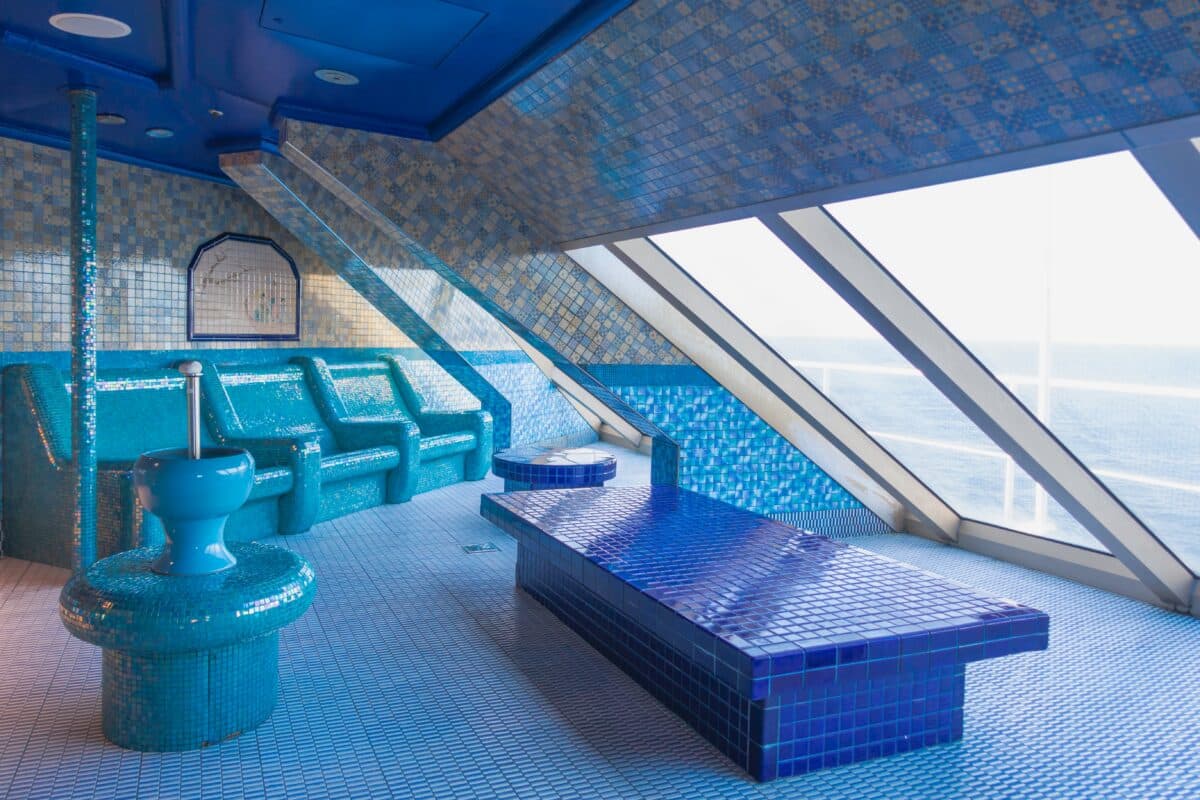
The Spa and Thermal Suite
I’ve often bought spa services, and they can be a real treat. Just go in knowing two things:
- A gratuity is automatically charged. The service charge can add up. Royal Caribbean automatically adds a 20% gratuity to spa and salon treatments, and Norwegian also lists a 20% service charge (thermal suite passes excepted). Other cruise lines have their own policies, so check the total before booking.
- The product pitch is optional. Expect a sales pitch for skincare products at the end of your treatment. You don’t have to buy anything, and if you’d rather skip the pitch, say so at the start.
Thermal suite passes are a closer call. I only buy one if the hours are reasonable and there are enough interesting amenities to make it worth going back. The only way to know is to take a tour on the first day and see whether it has things you’ll actually use and enjoy.
Suites, Perk Packages, and the Genie
If a suite fits our budget for a particular cruise, I book the suite. I love the extra space and the perks. I’ve also won some fantastic suites through Royal Caribbean‘s bid-for-upgrade program. (Here’s how RoyalUp works and how I’ve used it.)
The price gap is real. On one spring 2027 Star of the Seas sailing, a balcony cabin priced at $2,398 per person and a Sky Junior Suite at $5,249 per person. That’s why it helps to think of a higher-level suite as partly a bundle. The top suite classes on Royal Caribbean include perks you’d otherwise pay for separately, like free access to most specialty dining, gratuities, and Wi-Fi. Gratuities alone add up: on Royal Caribbean, they run $18.50 per person per day in a standard cabin, or $518 for a family of four on a 7-night cruise. (For more, see whether a suite is worth it, what a Royal Caribbean junior suite includes, and whether a balcony is worth it.)
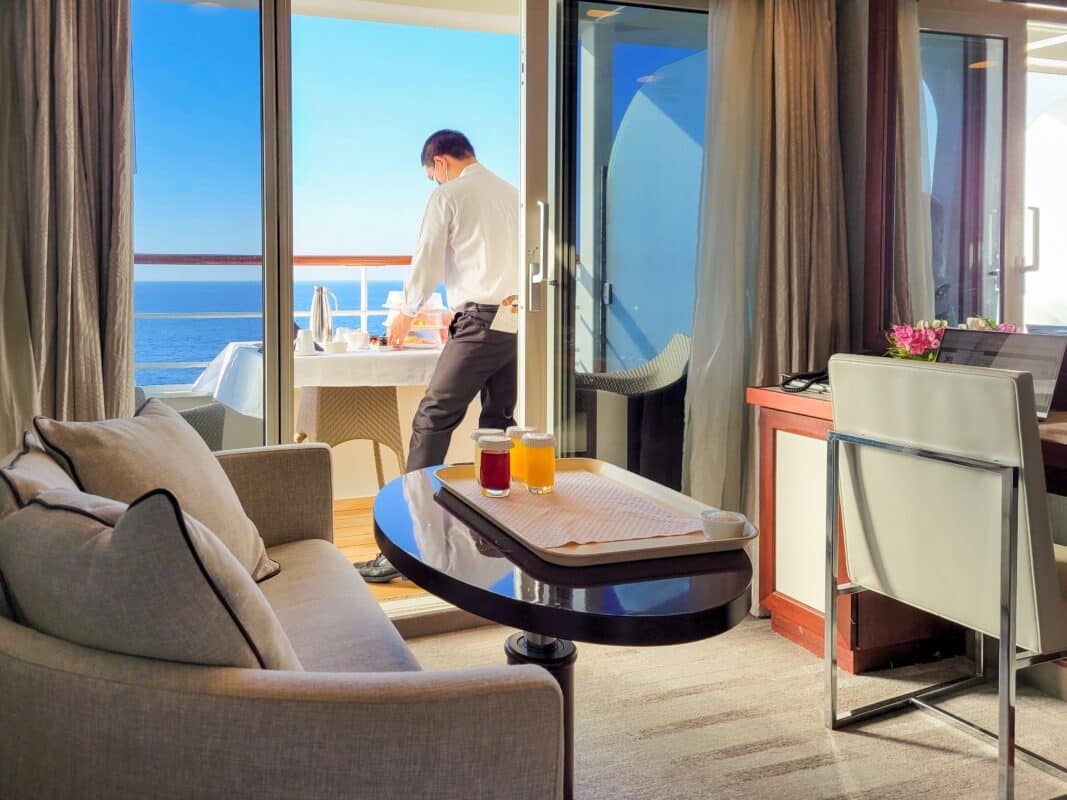
The Genie experience changed how I bid. On a Mediterranean back-to-back on Allure of the Seas, a RoyalUp bid landed us in a Star Class suite, which comes with a Royal Genie. It was phenomenal. We all took advantage of it, but my younger son used it the most. His favorite move was having the Genie order room service from Johnny Rockets. Sometimes just milkshakes. Very decadent.
That experience made me more willing to bid a bit more for the higher-level suites, because so much is automatically included.
Buying Genie service without the suite: Royal Caribbean now sells a Royal Genie Package to guests in any cabin on its Freedom, Radiance, Voyager, and Vision class ships. (On the Icon, Oasis, and Quantum classes, a Genie still comes only with a Star Class suite.) Pricing is dynamic, starting at $300 per person per day for adults and $200 for kids. It must be bought before the cruise, it’s nonrefundable, and everyone 6 and older on the reservation has to buy it. One veteran cruise writer paid $9,600 for his family of four on an eight-night Independence of the Seas sailing. The package bundles the Genie with beverage packages, specialty dining, Wi-Fi, and suite-level priority access, so if something like that is in your budget, run each component through the math above before deciding.
The Key, and similar programs on other lines:
The Key is Royal Caribbean’s paid perk package, with prices that vary by sailing. It includes a one-device VOOM Wi-Fi package for each participating guest, priority terminal access during a designated arrival window, an embarkation-day lunch, carry-on luggage drop-off, dedicated seating at certain shows, priority departure at tender ports, selected activity benefits, and an exclusive breakfast before disembarkation. Specific benefits vary by ship and itinerary.
Other cruise lines offer their own ways to purchase convenience and priority benefits. Carnival’s Faster to the Fun is priced by stateroom, with rates based on cruise length. Norwegian’s Priority Access is also priced by cabin, currently from $129 to $329 depending on sailing length.
MSC takes a somewhat different approach, offering Bella, Fantastica and Aurea booking experiences with different amenities and privileges. These are fare and experience tiers rather than direct equivalents of The Key.
Knowing What I Know Now
If I could go back to my early cruises, I’d do three things differently:
- Pre-book the new, iconic attraction the moment it opens for booking. An upset kid on a private island is an expensive lesson.
- Buy early, then keep checking. If the line allows it, cancel and rebook when a better sale comes along, especially around Black Friday.
- Stop buying soda packages on autopilot. Match the package to what each kid actually drinks.
Closing Thoughts
You don’t need any of these extras to have a wonderful family cruise. The fare covers your cabin, your meals in the main dining room and buffet, the shows, the pools, and the basic kids’ clubs.
But a few well-chosen extras can turn a good trip into a great one. For my family, that means Wi-Fi every time, specialty dining in moderation, independent excursions where they make sense, and a suite when the budget (or luck) allows. For your family, the list may look different. So run the numbers on the package you’re actually being offered, check the refund policy, and buy the things your family will really use.

Elaine Warren
Founder & Crew Chief
Elaine founded this website after publishing the book The Family Cruise Companion’s Guide to Cruising With Kids. (Second Edition) She has sailed on 55 cruises (and counting). She loves helping families navigate their way to an adventure-filled, fun, and memorable vacation.