

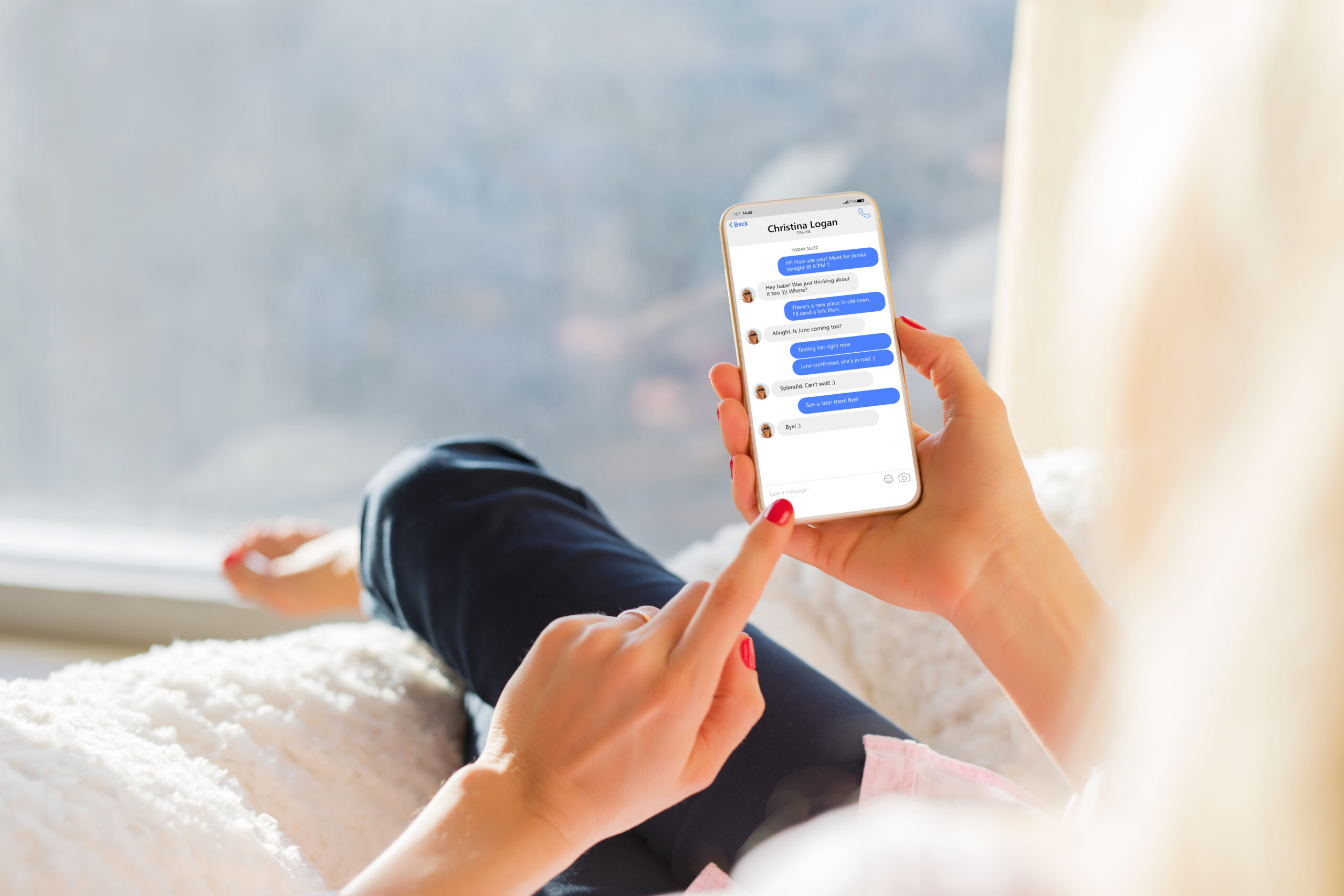
How to use your phone, text or wifi on a cruise without spending a small fortune. Stay connected to family and friends on and off the ship! Plan ahead with this handy guide (Updated for 2026).
When you’re planning a cruise, it’s easy to assume your phone will work the same way it does at home. Then you get on board, see “Cellular at Sea” or a ship Wi-Fi network pop up, and suddenly it’s not so obvious what you should actually use.
Here’s the deal: Wi-Fi on a cruise is much better than it used to be, but it still requires planning. Most major cruise lines now offer shipwide internet packages, many ships use Starlink-powered service, and cruise line apps can help you message people on board. But your regular cell phone plan may not cover shipboard use, and roaming at sea can still get expensive fast.
After more than 50 cruises and plenty of trial and error, my strong advice is this: decide before you board how your family will communicate. For most families, the safest setup is airplane mode, ship Wi-Fi when needed, and either the cruise line app or a messaging app like WhatsApp for staying in touch.
This guide explains how Wi-Fi on a cruise works in 2026, how cell phone coverage at sea differs from land-based roaming, how to text on a cruise ship, and how to avoid surprise charges.
Wi-Fi at Sea: A Look Back
I have vivid memories of the “dinosaur age” of cruise ship technology. On a long-awaited family vacation around 2008, I felt lucky to have only a modest amount of work trailing along—just a few hours and a couple of conference calls. Or so I thought.
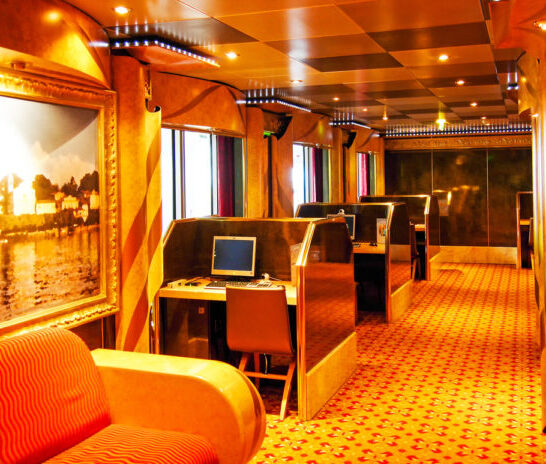
Bright-eyed and optimistic, I lined up early for one of the ship’s few computer terminals—the only way guests could access the internet back then. I figured I’d finish my work quickly and still make it to breakfast.
Hours later, I was still battling an excruciatingly slow connection that dropped more often than it worked. The gaps between connections were longer than the connections themselves. Meanwhile, the clock—and my internet bill, charged by the minute—kept climbing.
As for those conference calls? The special cruise package I had proudly arranged through my cell carrier was a total bust. Over two weeks, I managed to connect only once—while ashore, using a landline.
Cruise Ship Wi-Fi in 2026: What You Can Expect
Fast forward to today, and the landscape has changed dramatically. While you still can’t expect the same level of internet speed or reliability you enjoy at home, the improvements over the past decade have been remarkable.
So, what’s the bottom line?
Yes, Wi-Fi is available on most major cruise ships, and it is much better than it was years ago. On many newer or recently upgraded ships, you can use Wi-Fi in your stateroom, in public areas, and around much of the ship. But it still isn’t exactly the same as using internet at home.
Cruise Wi-Fi depends on satellite service, ship hardware, your location, weather, how many passengers are online, and the package you buy. That means you may be able to stream or video chat on one sailing and still experience slowdowns on another.
For most families, cruise Wi-Fi works best for:
- Messaging family members
- Checking email
- Using social media
- Looking up port information
- Making Wi-Fi calls if your plan and cruise Wi-Fi package support it
- Occasional work tasks
It is less dependable for:
- Long video meetings
- Heavy streaming
- Cloud backups
- Uploading large photo or video files
- Anything that requires a fast, stable connection every time
Using Your Cell Phone on a Cruise
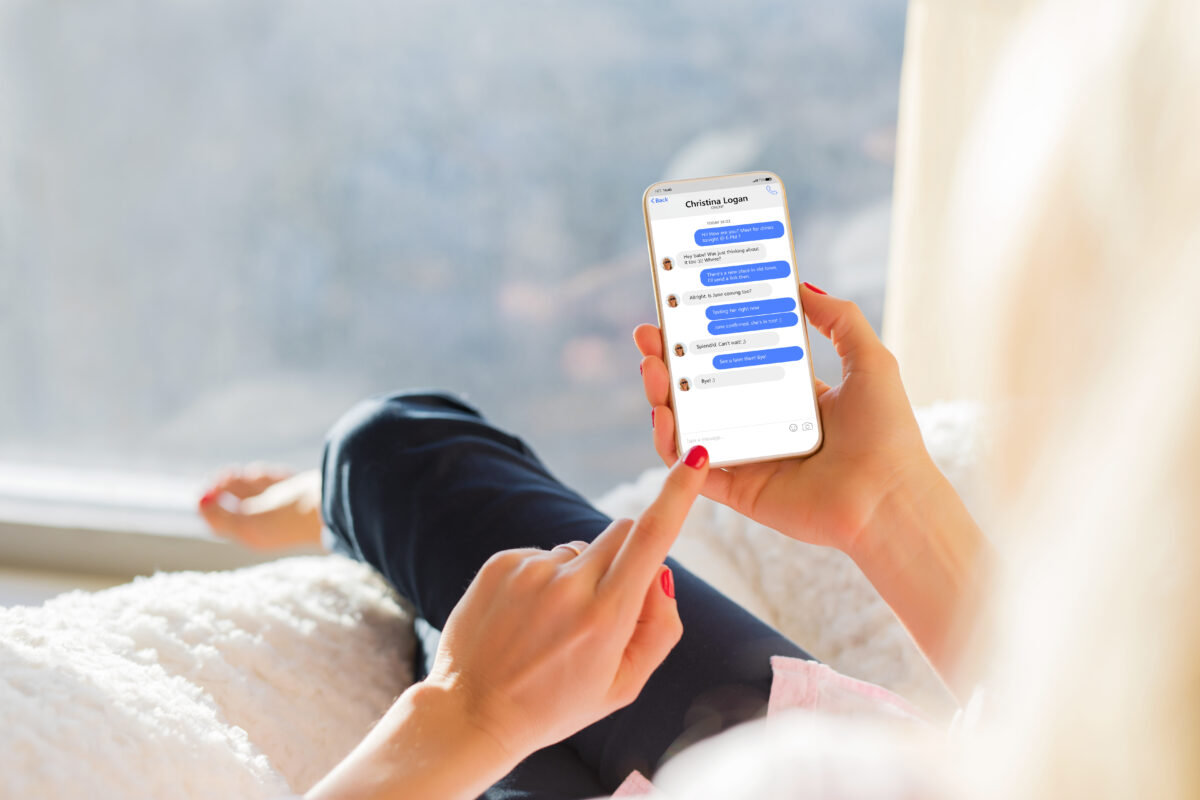
Important note: using your cell phone at sea is different from using it in a foreign country on land. When your ship is in international waters, your phone may connect to the ship’s maritime cellular network. That can trigger cruise-specific rates or a cruise pass, depending on your carrier. When the ship is close to land or docked, your phone may switch to a local land-based carrier instead.
In most cases, you can use your cell phone on a cruise ship—but it’s not as simple as it is on land. The key factors are whether your carrier provides coverage at sea, and what it will cost you.
Unlike traveling within the U.S., cruise ship service depends less on your geographic location and more on your ship’s equipment and your carrier’s agreements. You’ll need to check whether your carrier partners with your cruise line, as well as with your specific ship.
Even if your carrier offers cruise coverage, you’ll likely need to purchase a special cruise plan before you sail. Without it, your phone could default to expensive international roaming rates—sometimes as high as several dollars per minute. And standard international plans often do not cover calls made while at sea.
AT&T, Verizon, and T-Mobile all offer some form of cruise ship coverage. But just like on land, service quality can vary by carrier, cruise line, and even by ship. Before you leave home, you should review your available options—and if you need a cruise plan, be sure to add it before boarding, since most plans can’t be applied retroactively.
Let’s walk through what each carrier offers and what to watch out for.
AT&T Cruise Ship Coverage in 2026
AT&T now handles cruise ship usage through its International Day Pass program. As of the current AT&T cruise guidance, eligible customers can use the AT&T International Day Pass (IDP) on more than 400 supported cruise ships.
How it works:
- At sea: You’ll pay $20 per device for 24 hours of use.
- On land and at sea on the same day: Still $20 total for the 24-hour period.
- On land only: $12 for the first device, and $6 for each additional device the same day.
- The cruise version includes unlimited talk and text.
- It also includes 500MB of high-speed data per day.
- After the high-speed data allotment is reached, speeds may be reduced.
Important notes:
- No daily cap at sea: You are charged $20 per day at sea, even if you’ve already hit the 10-day cap for land usage.
- On land, you won’t be charged for more than 10 days per billing cycle.
- Your device will automatically switch between the ship’s maritime network while at sea and the local cellular network while in port.
- Make sure you enroll in International Day Pass before your cruise at att.com/myatt.
For most families, this can be useful for occasional calls, texts, or basic data. But it is not the same thing as buying an unlimited cruise Wi-Fi package. If you anticipate heavy streaming, data-intensive workloads, or keeping multiple devices connected, the ship Wi-Fi may still be the better choice.
Helpful Reminder:
When you’re more than six nautical miles from land, your ship will connect to the maritime network. When closer to shore or docked, your phone should switch automatically to the local network.
Verizon Cruise Ship Coverage
Verizon now offers coverage at sea through its Cruise Daily Pass program, designed to keep you connected while cruising.
How it works:
- Verizon Cruise Daily Pass costs $20 per line for a 24-hour session.
- It includes unlimited calls to U.S. numbers, unlimited texting, and 0.5GB of high-speed data.
- After the high-speed allowance, data continues at reduced speeds for the rest of the session.
- Verizon may offer additional high-speed data for an extra fee during the same 24-hour session.
- The pass applies only on participating ships and cruise lines, so check Verizon’s cruise coverage before you sail.
This can be a reasonable backup if you need phone access at sea, but it still requires attention. A family with several phones can run up a large bill quickly if every device triggers a daily session.
Important notes:
- The Cruise Daily Pass activates automatically once you make or answer a call, send a text, or use data while at sea (typically 12 miles or more from shore).
- To add Cruise Daily Pass, text CRUISE to 4004 before or at the start of your cruise, or add it through Verizon’s Trip Planner tool.
- Pay-as-you-go rates without the Daily Pass are $1.99/min for calls, $0.50 per sent text, and $0.05 per received text—with no data access at sea.
Helpful Reminder:
While onboard, always monitor your connection. If you disembark, you’ll be charged applicable land roaming rates (usually through Verizon TravelPass at $10/day).
You can check eligible cruise lines through Verizon’s Cruise Coverage portal here.
T-Mobile Cruise Ship Coverage
T-Mobile cruise coverage is more limited than ordinary international roaming. T-Mobile’s current guidance says cruise ships are not covered by international data passes, and cruise ship destinations are not eligible for International Pass data.
What this means in practical terms:
- Do not assume your T-Mobile international data pass will work on the ship.
- Talk and text rates may apply if your phone connects to a supported maritime network.
- Data roaming may be unavailable or treated differently from land-based international roaming.
- You should check T-Mobile’s cruise coverage tool for your specific ship before sailing.
Important notes:
- You cannot purchase a daily cruise pass with unlimited data like Verizon or AT&T. T-Mobile still does not offer cruise-specific cellular data plans.
- Only select cruise ships support T-Mobile’s maritime service.
- Service activation is automatic once you connect to a supported network at sea.
Helpful Reminder:
For most T-Mobile users, you’ll be better served by keeping airplane mode on while at sea. The easiest way to stay connected at sea is through cruise ship Wi-Fi, combined with free texting via apps like WhatsApp or iMessage.

Summary of Cell Phone Carrier Plans
| Carrier | Cruise option | Best use | Watch-out |
| AT&T | International Day Pass at sea | Calls, texts, and limited high-speed data on supported ships | Includes a daily high-speed data limit, so it is not a full replacement for ship Wi-Fi |
| Verizon | Cruise Daily Pass | Calls, texts, and limited high-speed data on supported ships | A 24-hour session can be triggered by use, so families should monitor each device |
| T-Mobile | Limited cruise ship roaming | Occasional talk or text where supported | Cruise ships are not covered by T-Mobile international data passes; use ship wifi for internet |
Before sailing, check your carrier’s cruise coverage by ship name, not just by cruise line.

Controlling Cell Phone Costs on a Cruise
Staying connected on a cruise can add up quickly if you’re not careful. Even with today’s improved carrier options, costs can climb fast—especially with per-day charges or unexpected roaming fees.
Fortunately, a few simple steps can help you manage your usage and avoid an expensive surprise when you get home.
Here’s how to stay in control:
- Add the right international option before you sail.
Whether it’s AT&T’s International Day Pass or Verizon’s Cruise Daily Pass, make sure the right setting is active before boarding.
(Most carriers do not allow you to apply a pass retroactively.) - Turn off data roaming unless you need it.
Disable Data Roaming in your phone’s settings before you board the ship. Turn it back on selectively if you plan to use a paid Cruise Daily Pass or land-based roaming option. - Use airplane mode + Wi-Fi when possible.
To avoid accidental cellular charges, set your phone to Airplane Mode and manually turn Wi-Fi back on.
This lets you access ship Wi-Fi without triggering maritime roaming charges. - Manage background data aggressively.
Apps like weather updates, navigation, and cloud backups can quietly consume data even if you’re not actively using them. Before you board:- Disable automatic app updates.
- Turn off cloud sync for photos.
- Pause email auto-fetch or set it to manual.
- Be mindful of streaming.
Streaming video and music uses large amounts of data. Always use ship Wi-Fi if you intend to stream—and only if your Wi-Fi plan allows it. - Limit games and apps that require live connections.
Some mobile games and apps constantly access the internet in the background. Either disable them or switch to offline-friendly versions during your cruise. - Monitor your usage daily.
If your phone plan or cruise Wi-Fi package includes usage tracking, check it regularly to avoid overruns.
Helpful Reminder:
Even if you purchase an unlimited Wi-Fi package on your ship, connection speeds and quality can vary widely depending on location, ship occupancy, and time of day.

Wi-Fi Calling: A Smart Way to Stay Connected at Sea
Wi-Fi Calling can be one of the easiest and most cost-effective ways to stay in touch while you’re cruising—without racking up expensive roaming charges.
If your phone and carrier support Wi-Fi Calling, you can make and receive calls or send text messages anywhere you have a Wi-Fi connection, including on your cruise ship.
Here’s what you need to know about using Wi-Fi Calling at sea:
Wi-Fi on a Cruise: How Wi-Fi Calling Works
Wi-Fi Calling lets your phone route calls and texts over a Wi-Fi connection instead of using a cellular network. When enabled, your phone behaves just like it would on land—only it’s using shipboard Wi-Fi instead of a cell tower.
- Most modern smartphones (iPhone, Samsung Galaxy, Google Pixel, etc.) support Wi-Fi Calling.
- Most major carriers (AT&T, Verizon, and T-Mobile) include Wi-Fi Calling for free on eligible plans.
- In most cases, calls made to U.S. numbers using Wi-Fi Calling are billed exactly like a domestic call—even if you’re technically overseas.
Helpful Reminder:
If you want to use Wi-Fi Calling during your cruise, you’ll need to purchase a Wi-Fi package that supports calling and messaging apps.
(Entry-level “Social” Wi-Fi packages on some ships may not be sufficient.)
How to Enable Wi-Fi Calling Before You Sail
Before you leave home:
- Turn on Wi-Fi Calling in your phone settings.
- Test it by switching your phone to Airplane Mode, then turning Wi-Fi back on—you should still be able to place a call if Wi-Fi Calling is active.
- Check your carrier settings to ensure that Wi-Fi Calling is enabled for international use, if applicable.
Once onboard:
- Set your phone to Airplane Mode (to avoid connecting to the ship’s cellular network).
- Turn Wi-Fi ON and connect to the ship’s Wi-Fi network.
- Your phone should automatically default to Wi-Fi Calling once a strong connection is available.
Advantages of Wi-Fi Calling on a Cruise
- Save money: Avoid roaming charges for calls and texts by using ship Wi-Fi.
- Potential improved reliability: Wi-Fi Calling can sometimes provide a more stable connection than shipboard cellular networks.
- Familiar experience: Call U.S. numbers just like you would at home.
Important Tip:
Wi-Fi Calling usually uses far less data than video calling or streaming, but it still depends on your phone, carrier, and the strength of the ship’s Wi-Fi. Test Wi-Fi Calling before you leave home, and do not assume it will work on every cruise Wi-Fi package. Some basic plans may block or limit calling features.
Understanding Data Usage at Sea: What Slows You Down
Even with a Wi-Fi package or a cruise ship Daily Pass from your carrier, it’s important to understand how different activities affect your connection at sea.
Some activities use very little data and work well even on basic plans, while others—like video streaming—consume large amounts of data and can slow down your connection or require a higher-tier package.
These numbers are rough planning estimates, not guarantees. Actual data usage can vary based on your phone settings, app settings, video quality, photo size, background syncing, and whether an app compresses files before sending them.
Typical Data Usage on a Cruise (Rough Planning Estimates)
| Activity | Approximate Data Usage | Cruise Tip |
|---|---|---|
| Sending 10 emails (without attachments) | ~0.5–1 MB | Fine for basic Wi-Fi or basic cruise plans. |
| Browsing the web for 10 minutes | ~5 MB | Light usage, manageable even on economy plans. |
| Uploading 5 photos to social media | ~25 MB | Moderate usage; best with a mid-level or better Wi-Fi package. |
| Streaming 1 hour of music (Spotify, Pandora) | ~40–70 MB | Usually fine with a mid-range or premium Wi-Fi plan. |
| Streaming 1 hour of standard-definition video (YouTube, Netflix) | ~500–700 MB | Requires a premium Wi-Fi package with streaming allowed. |
| Streaming 1 hour of high-definition (HD) video | ~1–1.5 GB | May not be feasible at sea; strongly depends on ship Wi-Fi quality. |
| Video calling (Zoom, FaceTime) for 1 hour | ~500–600 MB | Needs a strong connection and a premium Wi-Fi package. |
Cruise-Specific Wi-Fi Tips
- Check plan details carefully.
Many basic Wi-Fi packages do not support streaming or video calling unless you upgrade. - Save uploads for land days if possible.
Photo and video uploads use significant data. If you can, upload vacation photos when you’re docked and have access to faster land-based networks. - Download content ahead of time.
Save playlists, podcasts, and shows before your cruise so you can enjoy them offline without needing Wi-Fi. - Expect slower speeds at peak times.
Ship Wi-Fi tends to be busiest in the evenings or during sea days when more passengers are online.
Helpful Reminder:
Even cruise lines that use Starlink (such as Royal Caribbean and Carnival) may impose speed limits or prioritize basic browsing over high-bandwidth activities during peak periods.
Starlink and Cruise Wi-Fi in 2026
If you’ve cruised before—or even just heard stories—you might remember when getting online at sea felt like battling dinosaurs: slow, unreliable, and painfully expensive.
(And if you read the beginning of this article, you already know I have vivid memories of those days.)
Today, cruise Wi-Fi has taken a major leap forward, thanks to the rollout of Starlink, the SpaceX satellite internet service.
What’s different now?
- Faster speeds: Internet connections on many ships now feel much closer to what you’d expect on land, supporting everything from browsing to social media to video calling.
- Broader coverage: Starlink’s low-orbit satellite network provides stronger, more consistent coverage even when ships are sailing far from major coastlines.
- Better support for streaming and work: More cruise lines now offer Wi-Fi packages that allow streaming movies, participating in video calls, and using high-bandwidth apps.
Important Reminder:
While Starlink has dramatically improved internet access at sea, connection quality can still vary depending on your ship’s location, the number of passengers online, and the specific Wi-Fi package you choose.

Cruise Ship Wifi & Internet Access
Today, on many ships you will find packages offering “unlimited” access in some form and at a relatively reasonable price. While some luxury cruise lines offer free or included internet. For example, Regent Seven Seas, Hapag Lloyd, Silversea, and Crystal cruises all include wifi access with your cruise fare. On most large mainstream cruise lines, however, you will have to purchase access for an additional fee.
The tricky part is that prices change often. Cruise lines may vary internet prices based on ship, sailing date, itinerary, package level, device count, loyalty status, and whether you buy before the cruise or on board. For that reason, treat the prices below as planning guidance, not a guaranteed quote for your sailing.
When comparing cruise Wi-Fi packages, look at 5 things:
- Whether the plan supports streaming
- Whether it supports video calling
- Whether Wi-Fi Calling is supported
- How many devices can connect at the same time
- Whether you can switch between devices
For families, the device rule often matters as much as the speed. A 1-device package may be fine for one adult checking email, but it may not work well for a family trying to message each other, upload photos, and keep a teen connected.
Here’s the basic lowdown on internet packages for mainstream ships:
Carnival Wi-Fi Packages
Carnival offers four Wi-Fi plans to meet different connectivity needs while you’re cruising. Here’s what you need to know about their current internet options:
Carnival Wi-Fi plans include Social, Value, Premium, and Multi-Device Premium options. For most families, the choice comes down to how much you need to do online:
- Social Wi-Fi Plan: Best for social media and messaging apps. It does not include general web browsing or email.
- Value Wi-Fi Plan: Adds broader web browsing, email, news, sports, and weather. It does not support video streaming or cellular-network-dependent Wi-Fi calling.
- Premium Wi-Fi Plan: Adds faster service and supports streaming, video chat, and broader internet use where coverage allows.
- Multi-Device Premium Wi-Fi Plan: Allows up to 4 devices and can be useful for families who need several devices online at the same time.
Carnival pricing changes, so check your booking before you sail. As a general rule, pre-cruise purchases are usually cheaper than onboard purchases.
Important Notes:
- Pre-Cruise Savings: Pre-purchasing your Wi-Fi plan saves up to 15-25% versus onboard prices.
- Device Switching: For single-device plans, you can switch between devices, but only one device can connect at a time.
- Streaming Limitations: Streaming speeds depend on location and ship network conditions.
- Restrictions: Access to certain types of content (mature, gambling, or violent) is blocked. VPN connections are not supported.
Royal Caribbean Wi-Fi Packages
Royal Caribbean’s internet service is VOOM, powered by Starlink. Pricing varies by ship, sailing, promotion, and number of devices, so check your Cruise Planner before you sail.
Royal Caribbean typically sells internet access on a per-device basis. That does not necessarily mean each person needs a separate package. If you buy a 1-device package, you may be able to switch between devices, but only 1 device can be online at a time. A multi-device package is better if several family members need internet at the same time.
Not every family member needs their own package, and it is typically cheaper to have a single package for multiple devices than separate packages for each guest. You can purchase packages for 2, 3, or 4 devices at increasing per-device discounts. So, for instance, the price of purchasing three individual 1-device packages will usually be higher than the price of purchasing a single 3-device package.
VOOM can be useful for browsing, email, messaging, social media, streaming, and video chat, but performance can still vary at sea. Some Royal Caribbean suite categories include VOOM, so check your booking before purchasing a separate package.
Important Notes:
- Pre-Cruise Savings: Pre-purchasing through the Cruise Planner often saves 15–20% compared to buying onboard. Additional savings may be possible when bundled with drink packages. (Look for Black Friday specials!)
- Dynamic Pricing: Wi-Fi package prices vary based on the specific ship and specific sailing, and time of purchase (you’ll find multiple promotional sales throughout the year — all major holidays + “flash sales.”).
- Device Switching: Single-device packages allow you to switch between devices, but only one can be connected at a time. Similarly, a two-device plan allows two devices to be connected simultaneously, and so on for three- and four-device plans. In other words, you may have four devices with you, but if only two need internet access at the same time, a two-device package will be sufficient..
- Streaming Reliability: While Wi-Fi is faster than in the past, peak usage times may still affect speed and performance.
Princess Cruises Wi-Fi Packages
Princess Cruises offers two tiers of Wi-Fi service across its fleet: MedallionNet Classic and MedallionNet Max.
Princess offers MedallionNet service, with MedallionNet Classic available for separate purchase and MedallionNet Max included with Princess Plus and Princess Premier packages.
MedallionNet Classic is the a la carte option for guests who want basic internet access without buying a larger package. MedallionNet Max is the higher-tier version included with Princess Plus or Premier and is intended for heavier internet use, including streaming and video chat.
Important Notes:
- MedallionNet Classic pricing has been listed by Princess at $24.99/day for 1 device or $44.99/day for a multi-device plan.
- MedallionNet Max is tied to Princess Plus and Princess Premier rather than sold as a separate à la carte package.
- Platinum and Elite Captain’s Circle guests may receive a significant discount on MedallionNet packages.
Norwegian Cruise Line (NCL) Wi-Fi Packages
Norwegian currently uses two main package names: Voyage Wi-Fi Pass and Streaming Voyage Wi-Fi Pass.
The Voyage Wi-Fi Pass is the lighter-use option for browsing, email, messaging, and basic internet use. The Streaming Voyage Wi-Fi Pass is the better fit if you want streaming or video conferencing.
Norwegian’s public materials have recently listed the Voyage Wi-Fi Pass at about $29.99/day and the Streaming Voyage Wi-Fi Pass at about $39.99/day, with additional devices available for an added daily fee. Pricing and package terms can vary, especially if your booking includes Free at Sea or another promotional offer, so check your specific reservation before buying.
MSC Cruises Wi-Fi Packages
MSC Cruises offers two main internet packages: Browse and Browse & Stream.
The Browse package is designed for basic internet use, including web browsing, email, sending images, and messaging apps such as WhatsApp. It does not support video streaming, music streaming, or video chat.
The Browse & Stream package adds higher-use features, including video chat, music and video streaming, and social media video posting.
Important Notes:
- Device Switching Not Allowed:
Each device must have its own package. Unlike other cruise lines, MSC does not permit device switching. Once you activate a device, the package will be assigned to that device for the duration of the cruise (so be sure to select the correct device at the start). - Pre-Cruise Savings:
Packages are usually less expensive when purchased before your cruise through MSC’s Cruise Manager system. - Streaming Restrictions:
Only the Browse & Stream package supports streaming and video calling; the basic Browse package does not. - Coverage:
Internet is generally available in staterooms and most public areas, but connectivity may vary depending on ship location.
Celebrity Cruises Wi-Fi Packages
Celebrity Cruises offers Basic Wi-Fi and Premium Wi-Fi, with the right choice depending on how much you need to do online.
Basic Wi-Fi is designed for lighter internet use. It can work for basic web browsing, email, and texting through select messaging apps. It does not support streaming, video calls, large file emails, or sharing photos and videos on social media.
Premium Wi-Fi is the better choice if you want to video chat, post on social media, stream video or music, send larger email attachments, or use the internet more heavily during your cruise.
Celebrity’s All Included fare includes Basic Wi-Fi and the Classic Drink Package for eligible non-Galapagos sailings. Guests staying in The Retreat receive Premium Wi-Fi as part of the Retreat experience.
If you book All Included and want stronger internet access, Celebrity says you can upgrade from Basic Wi-Fi to Premium Wi-Fi before the cruise through Cruise Planner or once onboard. Pre-cruise pricing is generally lower than onboard pricing.
Captain’s Club loyalty status may also affect Wi-Fi pricing. Celebrity currently lists Wi-Fi package or upgrade discounts for Classic through Elite Plus members, and complimentary Premium Wi-Fi for Zenith members.
Important Notes:
- Pre-Cruise Savings: Purchasing Wi-Fi packages before sailing can offer savings compared to onboard pricing.
- Device Switching: Single-device plans allow you to switch between devices, but only one can be connected at a time.
Disney Cruise Line Wi-Fi Packages
Disney Cruise Line currently offers two main internet options: an Internet Package and an Internet + Streaming Package.
The basic Internet Package is intended for web browsing, email, social media, and communication apps. The Internet + Streaming Package is the higher-tier option for heavier use, including streaming.
Disney pricing can vary, and Disney does not always publish universal pricing in advance. Recent 2026 pricing has been reported at about $30/day for Basic Internet and $49/day for Internet + Streaming, but you should confirm the current price in the Navigator app once on board.
Disney Cruise Line currently sells internet packages through the Disney Cruise Line Navigator app once guests are connected to the ship’s complimentary DCL-GUEST Wi-Fi network. Internet packages are not currently available for pre-cruise purchase.
Disney has offered a discount when guests purchase an internet package for the full voyage within the first 24 hours of the sailing, but pricing and discounts can change. Check the Navigator app once you are at the terminal or onboard to see the current options for your specific cruise.
The Navigator app itself can be used onboard without purchasing an internet package, which is helpful for checking schedules, menus, onboard activities, and using Disney’s onboard chat features.
Holland America Line Wi-Fi Packages
Holland America currently offers three Wi-Fi tiers: Surf, Premium, and Stream.
- Surf: Best for web browsing, email, news, and messaging apps. Audio and video features are not supported.
- Premium: Adds broader support for audio and basic video features in messaging apps, but does not support video streaming services.
- Stream: The top-tier option for guests who want streaming services such as Netflix or Disney+, along with the benefits of the lower tiers.
Holland America says its fleet uses Starlink-powered internet, but speeds can still vary based on itinerary, weather, ship location, and network demand. Pricing is subject to change, and longer sailings may have discounted daily rates.
Important Notes:
- Pre-Cruise Savings: Eligible guests may be able to save by purchasing or upgrading to certain Wi-Fi packages before sailing. Holland America says pre-cruise upgrades to Premium or Stream may be available at discounted rates, but daily packages are not available for pre-cruise purchase.
- Loyalty Benefits: 5-Star Mariner Society members receive up to a $30 credit toward an internet package, but Holland America notes that this benefit is not valid for pre-purchased internet, including internet included through Have It All.
What About Wifi Access When You Are Off The Ship?
Whatever Wi-Fi package you may purchase on the cruise ship, it won’t work on shore (except on the cruise line’s private island). But you still have options.
First, your regular cell phone carrier may offer service on land. (see above). Second, you will likely find internet cafes or other establishments that offer free or low-cost wifi. It is very common to find restaurants offering free wifi, but you can also sometimes find free or cheap wifi at the beach. Particularly if it is affiliated with a resort. And, many excursion operators offer free wifi on tour buses.

Whenever you access Wi-Fi through public facilities, be cautious about transmitting personal information.
What About Cruise eSIMs?
Cruise-specific eSIM services are gaining more attention as an alternative to ship Wi-Fi or carrier cruise passes. These services are different from ordinary travel eSIMs because they are designed to work with participating maritime networks as well as some land-based networks.
They can be useful in certain situations, especially if you want data on your phone and your cruise line’s premium Wi-Fi package is expensive. But they are not a perfect replacement for ship Wi-Fi.
Before relying on a cruise eSIM, check:
- Whether your phone supports eSIM
- Whether your phone is unlocked
- Whether the service works on your ship and itinerary
- How much data is included
- Whether you need regular SMS texts for two-factor authentication
- Whether you plan to connect a laptop or tablet
For families, you should probably treat a cruise eSIM as a possible backup or specialty option, not the default choice for everyone in the group.
Texting On A Cruise Ship
For families, texting on a cruise usually means choosing between 3 different tools:
- Regular SMS texting through your cell carrier: Useful in limited situations, but may trigger cruise or roaming charges.
- Messaging apps over ship Wi-Fi: Useful for texting people on and off the ship, but everyone needs the same app and internet access.
- Cruise line app chat: Useful for messaging people on the same ship, but it usually does not work off the ship and may have age limits or feature limits.
For most families, the best answer is likely to use a messaging app that works over Wi-Fi, such as WhatsApp. The cruise line app can still be helpful for onboard coordination, but its usefulness may be limited if some members of your travel party fall below the app’s age requirement or cannot access the chat feature.
WhatsApp is the easiest cross-platform messaging app to recommend because it works on both iPhone and Android and is widely used internationally. Signal is a strong alternative if your group is willing to install it before the cruise. Facebook Messenger may be the easiest option for families who already use Facebook. iMessage can work well for Apple-only groups, but it is not a universal solution because messages to Android users may fall back to SMS, MMS, or RCS.
Before your cruise, make sure everyone downloads and tests the app you plan to use. Embarkation day is not the time to discover that one person cannot receive a verification code.
Text Using Cell Plan
If you have cellular service available on board through your regular carrier, you will also likely have the ability to text. However, any charges will be specified by your carrier. See above.
Generally, you probably won’t have unlimited texting on such a plan, unlike what you might be used to at home. Instead, you will have some type of per text charge. Most likely for outgoing text messages. And, at 50 cents a pop – a typical charge – this can add up quickly.
Text Using Cruise Wifi
One of the best alternatives to using your regular cell carrier for texting is to use a third-party app over wifi. These apps are typically free. A great free option is WhatsApp. It’s available for both iPhone and Android. However, if you don’t already have an account, you will need to download the app and set it up prior to leaving home (or at least while you are on land).
Note that third-party apps like WhatsApp are free in that there is no charge for the app itself, nor is there any charge for sending or receiving individual messages. However, you will need access to the cruise ship’s Wi-Fi, which usually requires some type of paid package.
Using WhatsApp as an example, you can send regular narrative messages, text photos and videos, and to some extent, you may be able to have a video call.
If you want to communicate with your travel companions, this is a great, convenient way to do so, provided they all have wifi access.
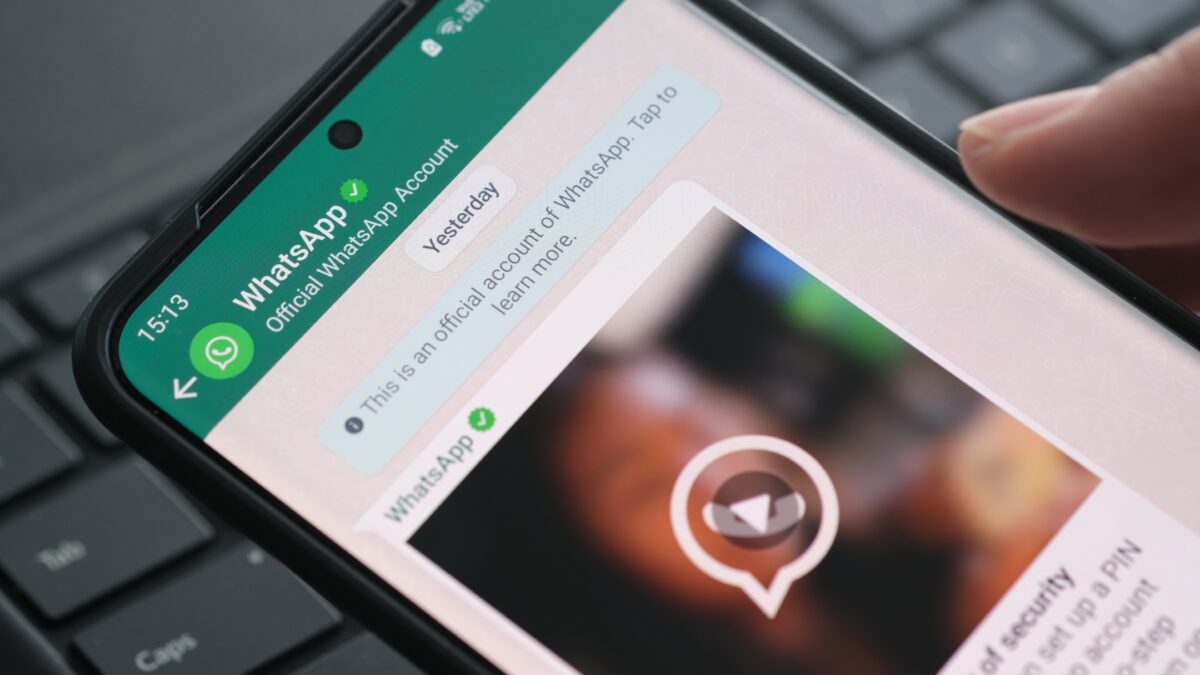
WhatsApp is one of the most widely used options because it works on both iPhone and Android and is familiar to many travelers. But it is not the only option. Depending on your family’s phones and preferences, you may also be able to use iMessage, FaceTime Audio, Facebook Messenger, Telegram, or another Wi-Fi-based messaging app.
The key is to choose the app before you sail, install it on everyone’s phone, and test it at home. Do not wait until you are already on the ship to find out that one person never downloaded the app or cannot receive the verification code.
Text Using The Cruise Line App
Most major cruise lines now have an app that facilitates digital communication. These have also greatly improved in recent years. The cruise line app can keep you apprised of what’s going on aboard the ship at any given moment. It can facilitate registering for the cruise and making reservations for dinner or a show.
Most cruise lines that offer a proprietary app include some form of messaging service within the app. In many cases, you can connect to the ship’s guest Wi-Fi and use the cruise line app without buying a full internet package.
But app messaging is not the same across every cruise line. Some cruise lines offer free guest chat. Some charge a small fee. Some have age restrictions. Some apps support group chats better than others. And most cruise line app chat only works while you are on the ship.
That makes app chat useful for simple family coordination, such as “meet at the pool” or “we’re heading to dinner.” It is not a complete substitute for regular texting or messaging people back home.
Avoiding or Minimizing Unwanted Charges
If you remember only one thing from this article, remember this: put your phone in airplane mode when you board, then turn Wi-Fi back on manually if you want to use ship Wi-Fi.
That simple step prevents your phone from quietly connecting to the ship’s maritime cellular network and running up charges in the background. It also gives you more control over when you are using paid cruise Wi-Fi, a carrier cruise pass, or land-based roaming in port.
At the end of your cruise, you don’t want to end up with lots of expensive charges that you didn’t realize you (or your family members) were racking up. You can end up with unpleasant surprises in two ways: on your cell phone bill and/or on your shipboard account. To avoid that unpleasantness, review these tips.

Your Shipboard Account
Let’s start with your shipboard account. If you have signed up for an unlimited cruise wifi package, you shouldn’t encounter any problems. To the extent you are able to access the internet, you won’t have any additional ship charges. But, if you have any package that’s less than unlimited (or no package at all), be aware of the following:
- If you have a certain number of minutes – either purchased or as some type of perk – don’t assume that you’ll lose access once those minutes run out. It is very likely your access will continue unabated and not necessarily with any obvious warning. Meaning that all of the minutes used after the initial package runs out will be assessed at a more expensive non-package rate.
- If you have a package with a set number of minutes or volume, be sure to log off once your session is completed so that you don’t inadvertently continue to consume time.
- If you are assigned a password for your internet account, take a photo of it on the devices with which you plan to use it to facilitate easy log in and log out.

Your Cell Phone Carrier
As for your cell phone carrier, be aware of the following:
- For any incoming or outgoing texts via your regular carrier (as opposed to an app), you may have a per text charge. This includes any texts exchanged with travel companions. A typical charge is 50 cents per outgoing text. If you and/or your family members are prolific texters, this could get expensive very easily.
- International roaming will kick in when you are about 12 miles from port. So, if you signed up for a cruise cell package with your carrier, those rates won’t apply when you are close to shore even though you are physically still on the ship. Instead, you will incur additional fees at whatever international rates your carrier charges. Check the network that’s displayed on your phone before making any calls when if you spot land on the horizon.
Best Way to Stay Connected on a Cruise: Quick Family Guide
| Situation | Best option | Why |
| Messaging people on the ship | Cruise line app chat (unless you’re limited by age restrictions) | Usually works through the ship’s guest Wi-Fi without buying a full internet package |
| Messaging people back home | WhatsApp, iMessage, or another Wi-Fi messaging app | Works over Wi-Fi and avoids maritime cellular charges |
| Calling home occasionally | Wi-Fi Calling or a carrier cruise pass | Can work well, but check your phone plan and ship Wi-Fi package |
| Working remotely | Premium or streaming-level ship Wi-Fi | Better chance of supporting video calls, VPN, and file uploads |
| Keeping teens connected | Multi-device ship Wi-Fi plan | Avoids fights over who gets the one active device |
| Avoiding surprise charges | Airplane mode plus Wi-Fi | Prevents accidental maritime roaming |
Closing Thoughts
Staying connected on a cruise is much easier than it used to be, but it still takes a little planning.
For most families, the best setup is simple: put phones in airplane mode, use ship Wi-Fi only when you need it, choose one messaging app before you sail, and make sure everyone understands how you’ll communicate on board.
You do not need to be online every minute of your cruise. But you also do not want to spend the week chasing your kids around the ship, missing messages from home, or coming back to an ugly phone bill.
A little planning before embarkation day goes a long way.

Elaine Warren
Founder & Crew Chief
Elaine founded this website after publishing the book The Family Cruise Companion’s Guide to Cruising With Kids. (Second edition recently released!) She has sailed on 50 cruises (and counting). She loves helping families navigate their way to an adventure-filled, fun, and memorable vacation.