

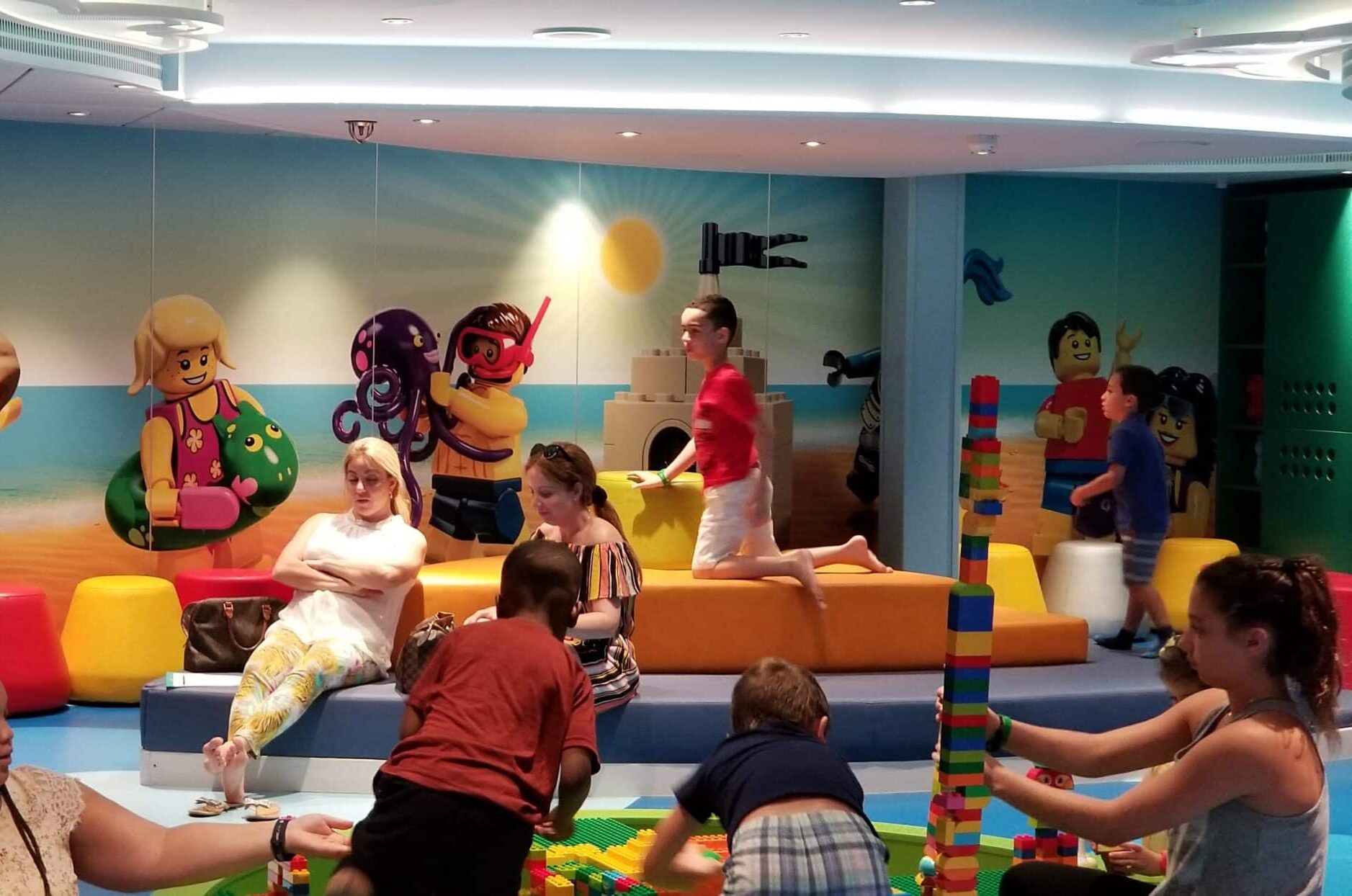
The existence of a kids’ club is a key reason a family cruise can feel like an actual vacation, and not just a trip where you happen to be near a pool.
Think about what a normal family vacation asks of you. You are the activities director, the snack supplier, the referee, and the one who never quite gets to read the book she packed. The cruise ship kids’ club quietly takes a big chunk of that off your plate. The children get supervised, age-based activities run by people who do this for a living. You get to choose your own mix of family time, couple time, and time that belongs to you alone. And, what may be the best part: your kids will very often be the ones pushing you out the door so they can get back to their friends.
After more than fifty sailings, most with children at every age and stage, from babes in arms to eye-rolling teenagers, I have come to believe that the single best measure of whether a cruise is truly family-friendly is not the waterslide count or the cabin size. It is the breadth and depth of the children’s programming. Exciting marketing will tell you every ship loves families. The kids’ club is where you find out whether that is true.
This guide walks you through how these clubs actually work, what care looks like at each age, how the major lines differ, and how to pick the right one for your family. This is the overview you want before you book anything.
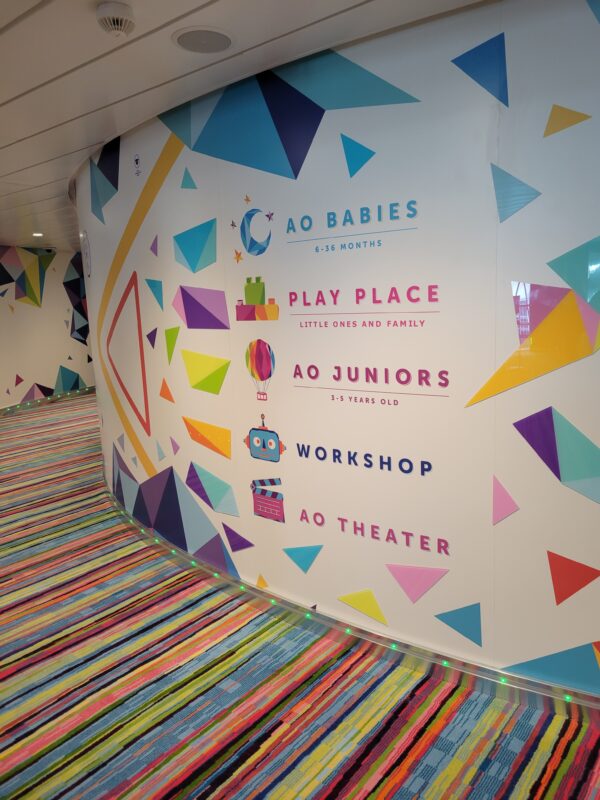
How the kids’ club on a cruise ship typically works
Every big-ship line that permits kids has a kids’ club, and every line gives it a different name and its own set of group names for the various ages. Underneath the branding, though, the structure is remarkably consistent once you know what to look for.
The club is the hub of all youth programming on the ship. During the day and into the early evening, the programming is almost always included in your fare at no extra charge. During the day, you can enjoy hours of organized, supervised fun. Later in the evening, usually somewhere around ten o’clock, most lines shift into a paid group babysitting mode, which I will get to.
Your first real interaction with the club happens on embarkation day, the day you board. There is almost always an open house. Go to it. Walk the space, meet the counselors, let your child get a look at the place and the other kids, and register while you are there. Registration is where you list any allergies or special needs and, just as important, set who is allowed to drop off and pick up your child. Do not put it off. The open house is also the moment a nervous child can stop imagining the club and start wanting to be in it.
Children are sorted into age groups as of the day you board. Some lines will tell you the age cut-offs are strictly enforced, and on paper they are. In practice, I have found there is often a little more wiggle room than the rulebook suggests. If your child sits right at the edge of a cut-off and you have a sensible reason to ask, it is worth a quiet word with the manager (and by “quiet,” I mean not when there’s a line of other parents behind you).
The situations where I have seen staff bend: siblings who want to be together, with the younger one close to the line, or a younger child traveling with older cousins or friends. They will usually at least give it a trial, and as long as your child behaves at the level expected of the group, it tends to be a non-issue. We have often cruised in summer, when one of my sons has a birthday at sea, and in those cases the youth staff has simply let him choose which group he wanted to start in.
One more thing to expect: during slower stretches, especially port days and around lunchtime, the lines often combine age groups. This is normal and nothing to worry about.
If there is one idea to let go of before your first cruise, it is the notion that a kids’ club is a place where you “drop off” your child the way you might at a gym daycare. These are structured, counselor-led activity programs with a real schedule. Your child is not being parked. They are being engaged, often better than you could manage yourself.
Who runs the club, and is it safe?
This is the question every first-time parent actually wants answered, so let me answer it plainly. The youth staff members are friendly, high-energy people who are genuinely good with children. Think along the lines of camp counselors and preschool aides rather than schoolteachers. Cruise crews are international, so backgrounds vary, and the program managers and supervisors tend to bring the most experience. What you can count on is that they are trained in the basics, such as CPR, first aid, and handling food allergies. One thing to understand going in: they run group activities, not one-on-one care. This is supervised group fun, not a personal nanny for your child.
The security around the clubs is reassuringly straightforward. Access is gated or monitored, and there is a sign-in and sign-out system that logs who hands a child over and who is authorized to collect them. Beyond that, the details vary by line. Some issue a wristband; others tie everything to your room keycard. Do not assume you will be able to watch your child move around the ship on a map, though. Live location tracking is not the norm.
Reachability works differently than many first-timers expect, so it is worth being clear. If you use a nursery for a baby or toddler, you will typically be handed a pager. For younger children in the main club, some lines will give you a device on request. For older kids who sign themselves in and out, you generally will not be paged at all. (If you definitely want to be reachable and you know you will be out of your cabin, leave your cell number so someone can call you.)
Separately, the ship can always locate or page a passenger in a genuine emergency, using keycard activity and surveillance and/or paging over the audio system, but that is a shipwide capability, not something specific to the kids’ club.

The three kinds of coverage to plan around
Once you understand the mechanics, the smartest way to think about kids’ club is not “where is it” but “when do I need it.” Coverage falls into three windows, plus a bonus one on certain itineraries, and matching them to your plans is most of the planning battle.
Sea days are when the programming is at its fullest. The ship is your whole world during a sea day; the club runs a packed schedule, and this can be when you will get your longest uninterrupted stretches of adult time. Spa morning, a long lunch, an actual nap. Sea days are the gift.
Port days are where the rules get interesting, and where first-timers can get tripped up. The question that matters is simple: can you leave the ship while your child stays behind in the club? Some lines let you go ashore with your child happily in their care. Others require at least one parent or guardian to stay on board. If you have your heart set on a particular shore excursion that your kids cannot or should not join, you need to know each line’s port-day policy before you book, not after.
Evenings and after hours are the paid window. When the complimentary programming wraps, usually around ten, most lines roll into group babysitting for an hourly fee, often running to midnight or one in the morning. This is what buys you a real grown-up dinner or a show.
Private islands add a fourth wrinkle worth flagging. If your itinerary includes a cruise line’s private island, that day comes with its own childcare arrangement, which may differ from a normal port day, but still exists in some fashion.
Cruising with a baby or toddler
If your youngest is under three, the regular kids’ club is not quite your world yet, and the rules change widely across cruise lines. Most lines do not start their standard, complimentary programming until age three. Carnival is the notable exception, opening its camp to two-year-olds.
Below the age of 3, what you get falls into two very different categories, and the difference between them matters enormously for how much actual freedom you will have.
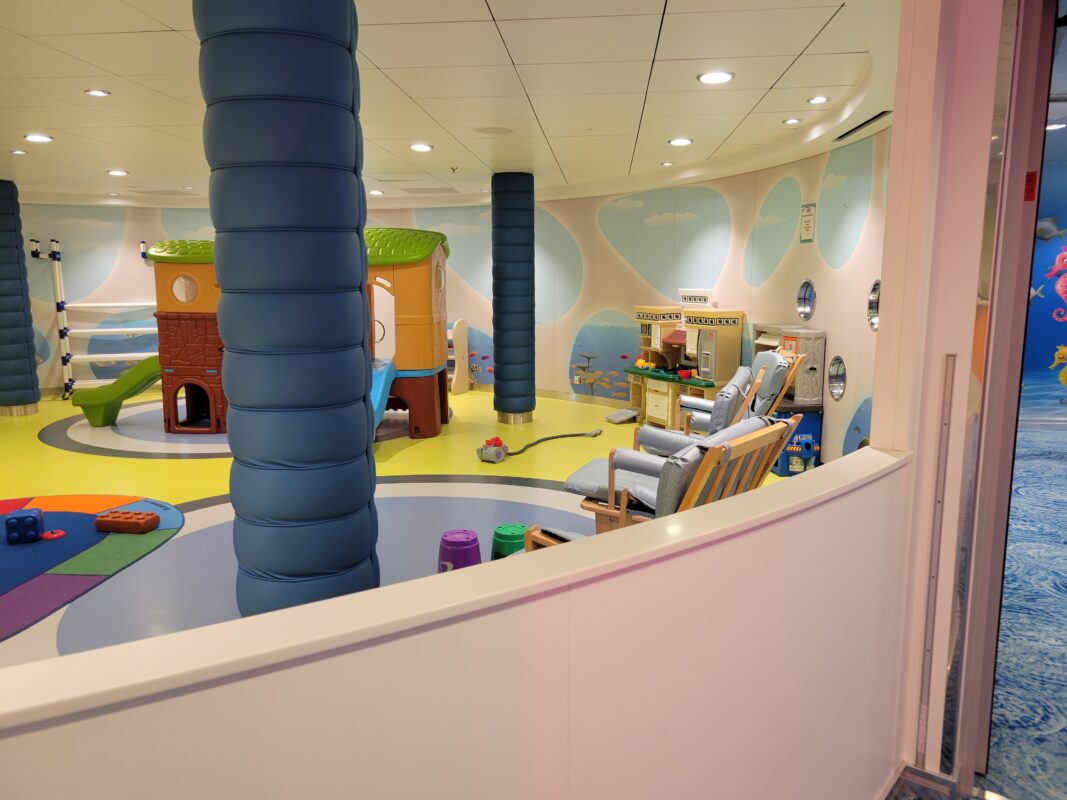
The first category is stay-and-play. The ship sets aside a space with age-appropriate toys and, often, a counselor running little activities, and you bring your child and stay with them. It is lovely, social, and gets you out of your cabin. What it does not get you is time off, because you are right there the whole time. Celebrity’s “Toddler Time” and Norwegian’s “Guppies” open-play sessions are the classic examples. On many ships, this is the only under-three option available.
The second category is true drop-off nursery care, where trained staff watch your child, and you actually leave. This is the one that buys you a shore excursion or a real dinner. Where a nursery exists, it generally takes children from six months old, charges an hourly fee, and requires reservations, sometimes well in advance, because capacity is small.
For a long time, only two cruise lines offered true drop-off care for infants and toddlers: Disney’s “It’s a Small World” nursery and Royal Caribbean’s “Royal Babies and Tots” nursery. Disney has a nursery on every ship. Most Royal Caribbean ships also have a nursery, but a few of their older, smaller ships don’t. So check your specific ship before booking.
In recent years, both MSC and Carnival have joined the baby party. Both offer some form of fleet-wide nursery service (for a fee).
A few practical notes for the under-three crowd. When you use a nursery, you will typically be handed a pager so the staff can reach you. Gratuities for nursery staff are not required, but if you find yourself relying on them all week, a tip at the end is genuinely appreciated. And confirm the particulars directly with your line before you book, because this is the corner of kids’ programming that changes most often and varies most by ship.

The main club: roughly ages three to twelve
Once your child turns three, the doors to the real kids’ club swing open, and this is the experience most people picture when they imagine cruising with children.
Do not picture it as nonstop coverage, though. On sea days, clubs often close for a couple of breaks, usually around lunch and dinner. Some lines offer a paid option to keep your child with the group for a supervised meal in one of the dining venues, which is handy on a night you want an adult dinner. Port days usually run closer to all-day coverage. The standout exception is Disney, whose clubs skip the midday and dinner closures entirely and run continuously through sea days. Disney does trim its hours and schedule fewer activities on port days, but without the meal-time gaps you find on other lines.
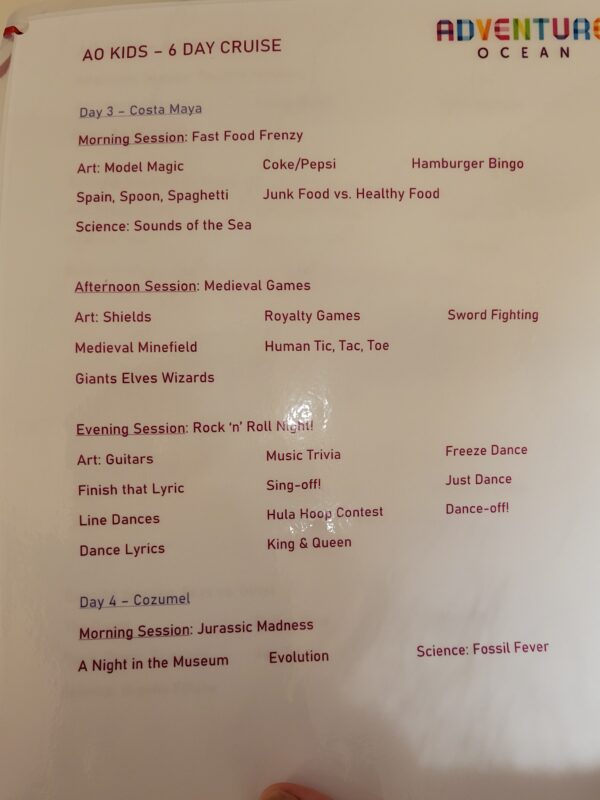
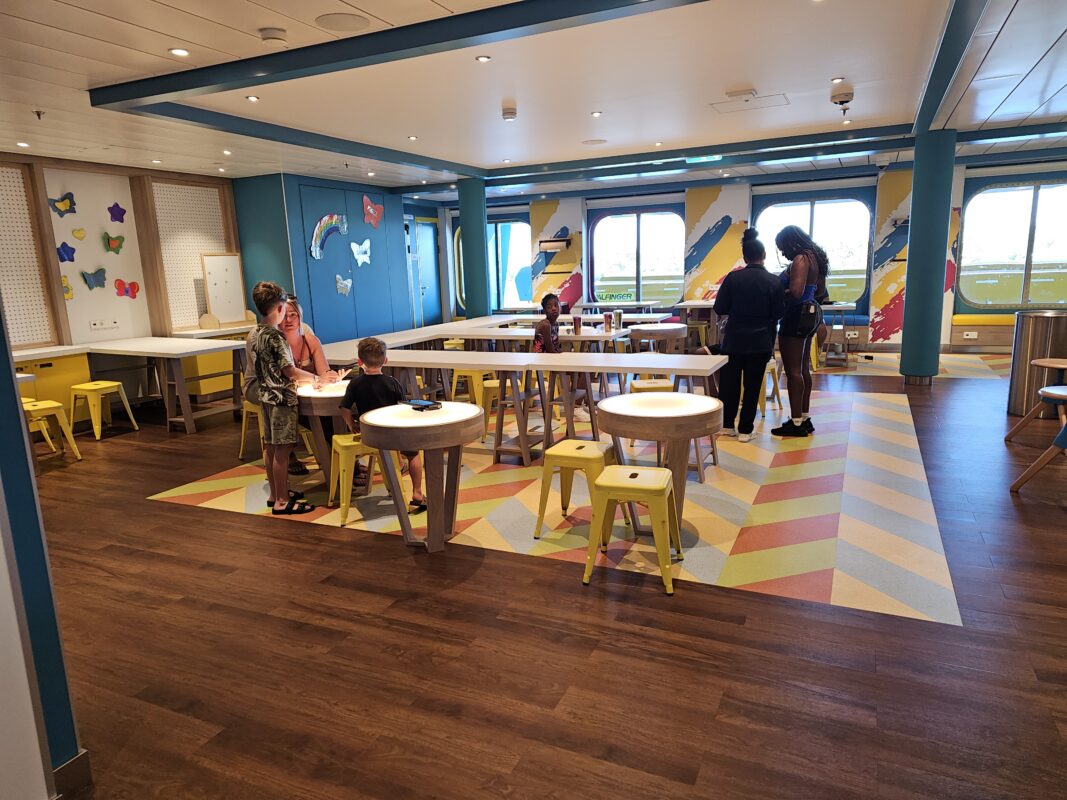
A typical day inside the club is busier and more structured than many parents expect. The counselors run a series of scheduled, structured activities, and depending on the ship and the line, there may also be a parallel track of other activities or free play that kids can choose from. Over the course of a sea day, your child might cycle through arts and crafts, a science or building challenge, a scavenger hunt that sends them roaming the ship in a supervised pack, sports and relay games, a theme party, and a talent show.

Some lines lean into signature touches, like Norwegian teaching actual circus skills and then letting the kids show them off at an afternoon performance. The through-line across cruise lines is that this is active, organized, peer-driven fun, which is exactly why so many children would rather be in the club.
Within the club, children are typically split into age bands, each with its own space, counselors, and schedule. The exact cutoffs and names vary, but you will usually see something like a three-to-five group, a six-to-eight group, and a nine-to-twelve group.
A couple of lines structure things differently, and it is worth knowing which. Disney groups all children ages 3 to 10 together in the Oceaneer Club and Lab rather than breaking them into age-based sub-groups. Within that space, activities are organized by interest and maturity rather than age, so a 4-year-old and a 9-year-old can participate in the same thing if it suits them both. Siblings or friends of different ages can stay together rather than being split up.
Princess uses just two broad bands rather than three. As I mentioned earlier, during quieter stretches like port days and lunchtime, lines also tend to merge neighboring groups, which is normal.

What about kids in diapers?
Most lines require that a child be fully toilet trained to join the regular club, full stop. No diapers, no pull-ups, and if there is an accident, they will call you to come handle it. If your barely-three-year-old is still in the thick of training, this single rule can quietly knock a line off your list.
There are exceptions, and they matter. Carnival is the most accommodating, letting children who are not fully trained join from age two. You provide the diapers, and you can decide whether the youth staff change your child or page you to come do it. The one limit: staff will not change children over age five or over fifty pounds.
Norwegian also permits kids in diapers in its club, provided a parent stays reachable by pager to handle changes.
One separate rule trips people up here too: the pools. As a general matter, swim diapers are not allowed in the main pools and hot tubs, which is a different policy from the club itself. The wrinkle is that some ships have dedicated water play areas built for the littlest guests that do permit swim diapers, so it is not a flat ban everywhere. Carnival bars swim diapers from all of its public water facilities, while many Royal Caribbean and Disney ships have splash zones approved for swim-diaper-aged children. Check your specific ship.
Tweens and the independence decision
Somewhere around age nine, a new question lands in your lap, and it is genuinely yours to answer: do you let your child sign themselves in and out of the club? Most lines open this option up in the nine-to-twelve range, while Princess and Disney go as low as eight. It is entirely optional. You decide whether to grant the privilege at all, and the club will honor whatever you set.
On its face, it sounds simple. In practice, there are some caveats that vary from line to line. Self-sign-out is commonly switched off on port days and is often restricted late at night. The single most confusing piece is what happens at the changeover from the free daytime program to the paid evening hours, usually around ten o’clock. On some ships, if your child is still in the club at that moment, they roll automatically into the hourly-fee program, and whether they are still allowed to sign themselves out at that point is exactly the kind of detail that varies.

Let me give you a real example of how much it varies. On one Norwegian sailing, the rule was that self-signers were automatically released from the club at ten unless a parent had given express permission that specific day for the child to stay later. You could not approve it once for the whole cruise. It had to be renewed each evening. One night I forgot. My older son, a self-signer, was being herded into the checkout line despite insisting he was supposed to stay, when my younger son spotted what was happening and raced over. As it was reported back to me, he threw his arms around his big brother and begged the staff not to kick him out. Once they realized someone from our family would have to come collect the younger one regardless, they relented and let them both stay. We laugh about it now, but the lesson stuck: confirm the specific rules on your specific ship, and do not assume last night’s arrangement still applies tonight.
There is also a useful middle setting that some ships offer: letting your child sign in but not out. It is a nice compromise. If dinner wraps early and your tween wants to head up to the club, you can send them on their way rather than escorting them, but you still control when and with whom they leave.
Beyond the mechanics, the harder part is deciding how much freedom feels right, and that is partly about your child and partly about what everyone else’s kids are doing. It is worth finding out early whether the other tweens are signing themselves out and roaming in a pack, because the situation you want to avoid is your child being the only one left in the club while their new friends have all skipped out for ice cream or pizza. That is nobody’s idea of a good night. Talk it through with your child before the cruise, set clear expectations about where they may go and when to check in, and revisit it as you get a feel for the ship.
Teens
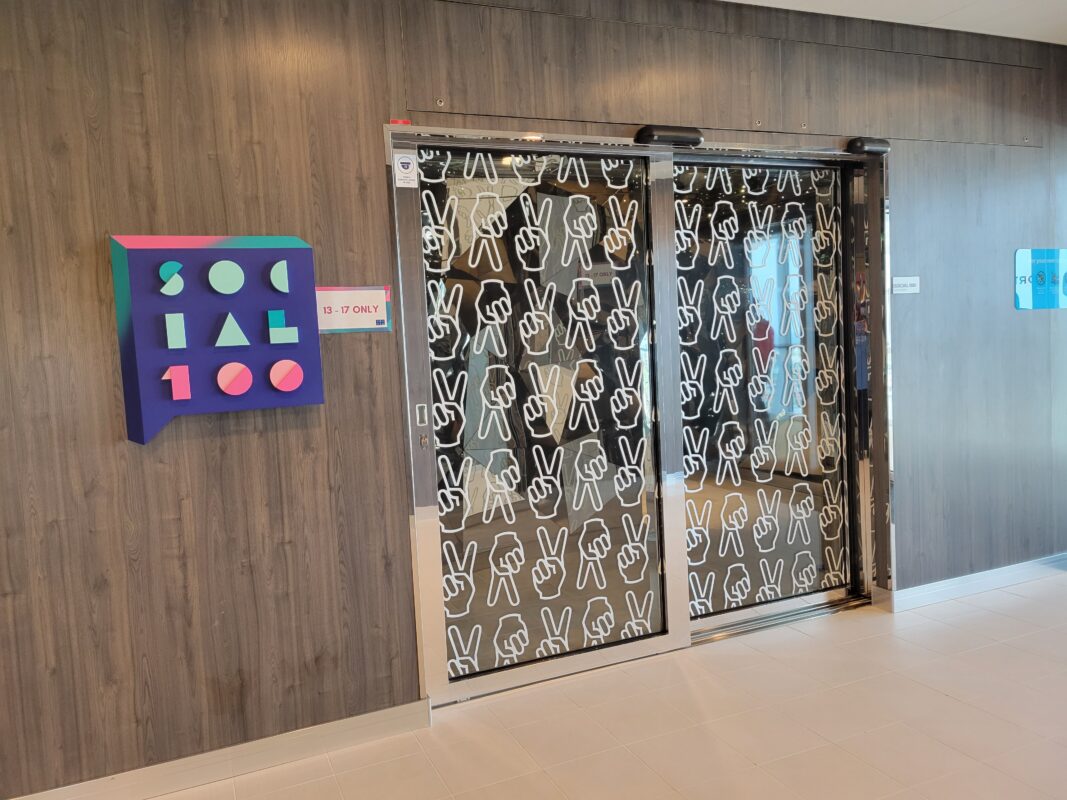
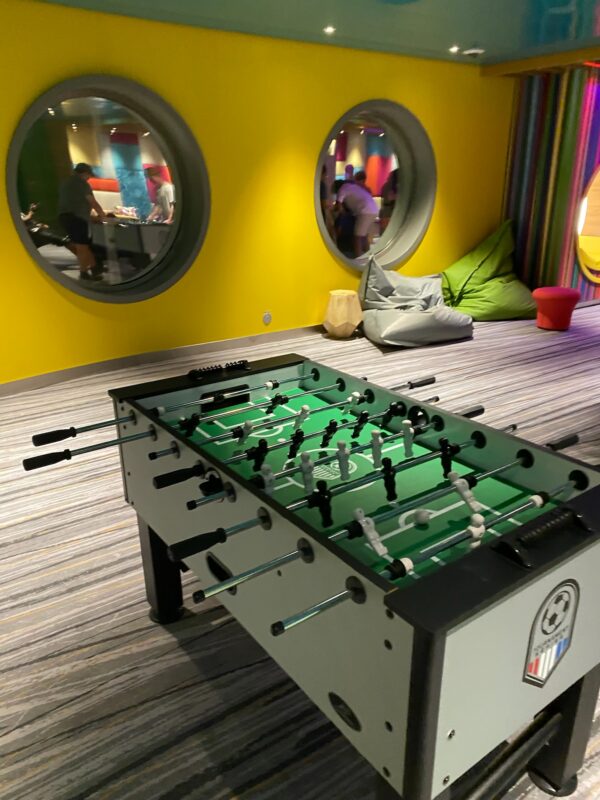
Teenagers are a different animal, and the club changes shape to match. For this age group, think less summer camp and more lounge: a dedicated, teen-only space where they can hang out, with counselors hosting events around it rather than running them through a schedule. Most lines serve teens from thirteen to seventeen, and several split into a younger-teen tier and an older-teen tier, so a thirteen-year-old is not thrown in with a near-adult.
The big structural shift from the tween years is freedom of movement. Teens generally come and go as they please, with no sign-in or sign-out required and no parental authorization. The youth staff host activities and keep an eye on things, but they are not tracking who is in the room at any given moment.
As for what they actually do, the menu of potential activities can vary widely based on individual ship and who is running the program. I admit, many times in recent years, we have been underwhelmed. If you’re traveling with older kids, you should spend time assessing whether the ship has sufficient other activities that your teen enjoys and will keep him engaged. For example, strong sports facilities and programming.

The major lines at a glance
Every line runs its program a little differently. The table below is a quick orientation across the eight most family-relevant ocean lines, not the full picture. Ages, fees, and ship-by-ship details change often, so treat this as a starting point and confirm the specifics for your exact ship and sailing.
| Cruise line | Drop-off nursery (under 3) | Self sign-out | After-hours care | Character tie-in | Known for |
|---|---|---|---|---|---|
| Carnival | Yes. | Ages 9-11 with permission; teens come and go | Yes (Night Owls, 6 mo-11 yr) | Dr. Seuss | Lively, budget-friendly, strong water play |
| Celebrity | No. Parent-stay “Toddler Time” only | Ages 10-12 during club hours | Yes (slumber party) | None | Upscale, fewer kids, no big water attractions; autism-friendly certified |
| Disney | Yes (It’s a Small World, 6 mo-3 yr) | Age 8+ with permission (Oceaneer Band) | No separate late-night sitting; clubs open late | Extensive (Disney, Marvel, Star Wars) | Most immersive; continuous hours on sea days |
| Holland America | No (parent-stay family hours only) | Teens (13+) come and go; under-13 signed out by adult | No (clubs close ~11 pm) | None | Traditional, older crowd, strong in Alaska |
| MSC | Yes | With parent permission | Yes | Doremi family + Lego | European flair, value/kids-sail-free, Lego |
| Norwegian | Norwegian Escape only (Guppies Nursery, 6 mo-3 yr); verify it is operating | Ages 10-12 with permission (not port days/late night) | Yes (Late Night Fun Zone, fee) | None | Relaxed Freestyle, water parks, go-karts, budget |
| Princess | No (under-3 with a parent) | Ages 8-12 with permission | Yes (late-night sitting, fee) | None (Discovery partnership) | Skews older, splash pads over big slides, strong in Alaska |
| Royal Caribbean | Yes (Royal Babies and Tots, 6-36 mo) | Ages 9-12 with permission | Yes (late-night group sitting, fee) | None | Biggest ships, most activities, huge facilities; great for multigen, sports, water parks |
How to choose the right line for your family
There is no single best kids’ club, only the one that fits your family this year, at these ages, on this budget. The good news is that a handful of honest questions will narrow the field fast.
Start here.
- How old are your children right now, and will any of them need true drop-off care for an under-three?
- How much do characters and theming matter to them?
- How big a priority are splashy water attractions and active, daredevil stuff?
- Do you expect to leave the ship on port days without the kids?
- And do you want a ship teeming with other children, or a calmer, more grown-up vibe?
Your answers to those five questions sort the lines more reliably than any third-party ranking.
Here is how the most common situations tend to shake out, with my honest lean in each.
If you have a baby or toddler who needs drop-off care, you are really choosing among four lines, since those are the ones with genuine drop-off nurseries: Disney, Royal Caribbean, Carnival, and MSC. Confirm the nursery on your exact ship and sailing before you bank on it, because availability can be ship-specific.
If you have a character-obsessed little one, Disney is the obvious answer and worth the premium if that magic is the whole point of the trip for your child. The thriftier alternative is Carnival, whose Dr. Seuss theming delivers real character moments at a fraction of the price.
If you are traveling multigenerational or with a wide spread of ages, Royal Caribbean is my lean, precisely because its range keeps toddlers, tweens, teens, and grandparents all occupied on the same ship. MSC is the value alternative for the same job.
If your crowd is older kids and teens who want thrills, Royal Caribbean and Norwegian rise to the top, with Norwegian’s go-karts, water parks, and laid-back Freestyle approach appealing to independent teens. Royal Caribbean is also a great pick for kids who love sports. Almost all of its ships have some kind of sports facility, and some, like the Quantum and Quantum Plus-class ships, have extensive ones.
If you want a calmer, more upscale ship and the kids’ club is a nice-to-have rather than the main event, Celebrity, Princess, and Holland America are your lanes. Celebrity is polished, but remember it has no drop-off care under three and no big water attractions. Princess and Holland America skew toward older passengers and shine on itineraries like Alaska, making them natural fits for multigenerational trips centered on grandparents.

A few last tips
Find the toy lending library. Many ships quietly offer a free toy or game lending program, where you check out toys for the cruise and return them at the end. It is a small thing that pays off enormously, perfect for quiet cabin play on a tired afternoon or for buying yourself fifteen minutes while you get ready for dinner. Ask at the kids’ club or guest services early, because the best stuff goes fast.
Know what your line stocks for babies, because it varies wildly. This one genuinely surprises people. Disney sits at the strong end of the spectrum: its onboard shops carry diapers, training pants, ready-to-feed formula, baby food, bottles, pacifiers, and the rest of the baby-aisle basics. Royal Caribbean occupies a useful middle ground, letting you pre-order diapers, wipes, and baby food to be delivered to your stateroom before you sail. Others, with Carnival the classic example, carry essentially no baby supplies at all. Find out exactly what your specific line provides before you sail, and pack or pre-order accordingly. Running out of formula mid-cruise is not a problem you can solve at sea.
If your child has special needs, ask what the line actually offers. This is an area where the major lines have made real progress, and it is worth a specific inquiry rather than an assumption. Some have formal autism-friendly certifications and provide accommodations like priority check-in, sensory-friendly film screenings, flexible club participation, and trained staff. If this matters for your family, contact the line ahead of time and ask precisely what is available on your ship, because it is not uniform across the fleet.
Frequently asked questions
Are cruise ship kids’ clubs free?
On the mainstream lines, the daytime and early-evening programming is included in your cruise fare, with no hourly charge and no reservations. You pay extra in two situations: drop-off nursery care for children under three, and late-night group babysitting after the complimentary hours end, usually around ten o’clock.
What age do kids’ clubs start?
Most lines open their standard, complimentary club at age three. Carnival is the exception, starting at two. For children younger than that, your options are either a paid drop-off nursery, offered from six months on the lines that have one, or parent-participation playtime where you stay with your child.
Does my child have to be potty trained?
For the regular club, most lines require full toilet training without diapers or pull-ups. The notable exceptions are Carnival, which allows children who are not fully trained as long as you supply the diapers, and Norwegian, which permits it provided a parent stays reachable by pager. Drop-off nurseries for the under-three crowd are set up to handle diapers.
Can I leave the ship on port days while my child stays in the club?
For most cruise lines, yes. Holland America requires that at least one parent or guardian stay on board while their child is at kids club. Norwegian does as well, in certain situations (such as kids in diapers).
Is there babysitting at night?
Yes, on most big-ship lines. When the free programming ends, usually around ten, the club shifts to paid group babysitting, which typically runs until around midnight or one in the morning. One thing to know: children who are allowed to sign themselves out during the day often cannot do so during these late-night hours, when an adult must collect them.
Are the clubs safe, and how do they keep track of my child?
Access is gated or monitored, and there is a logged sign-in and sign-out system that controls who hands a child over and who is authorized to collect them. Staff are trained in the basics, such as CPR, first aid, and allergy response. The finer details vary by line. Some use a wristband while others tie everything to your room card. If you use a nursery, you will typically carry a pager.
When and how do I register?
You register on embarkation day, the day you board, and most ships hold an open house at the club so you can tour the space and meet the counselors while you sign up. Registration is where you list allergies and special needs and set exactly who is allowed to drop off and pick up your child. Do it early rather than waiting until you want to use the club.
Closing Thoughts
Here’s the key takeaway, especially if this is your first cruise with kids. The kids’ club is an amenity that can make sure that a family vacation is fun for everyone at once. Your kids get a world built for them, full of new friends and activities, and you get much-needed adult time and/or me-time.
Pick the line that fits your family this year, go to the open house on day one, and let the counselors do what they do best.

Elaine Warren
Founder & Crew Chief
Elaine founded this website after publishing the book The Family Cruise Companion’s Guide to Cruising With Kids. (Second edition recently released!) She has sailed on 50 cruises (and counting). She loves helping families navigate their way to an adventure-filled, fun, and memorable vacation.