Are you wondering whether Caribbean jewelry prices are actually better, or just clever marketing aimed at tourists? Not sure if you should buy that bracelet in port or wait until you get home? Let’s take a closer look at why is jewelry cheaper in the Caribbean (sometimes).
Here’s the deal: I’ve watched a serious jewelry shopper work her magic in St. Thomas for nearly 20+ years, and the savings can be very real. But understanding why requires knowing how duty-free and tax-free pricing actually works.
What Two Decades of Caribbean Shopping Taught Me
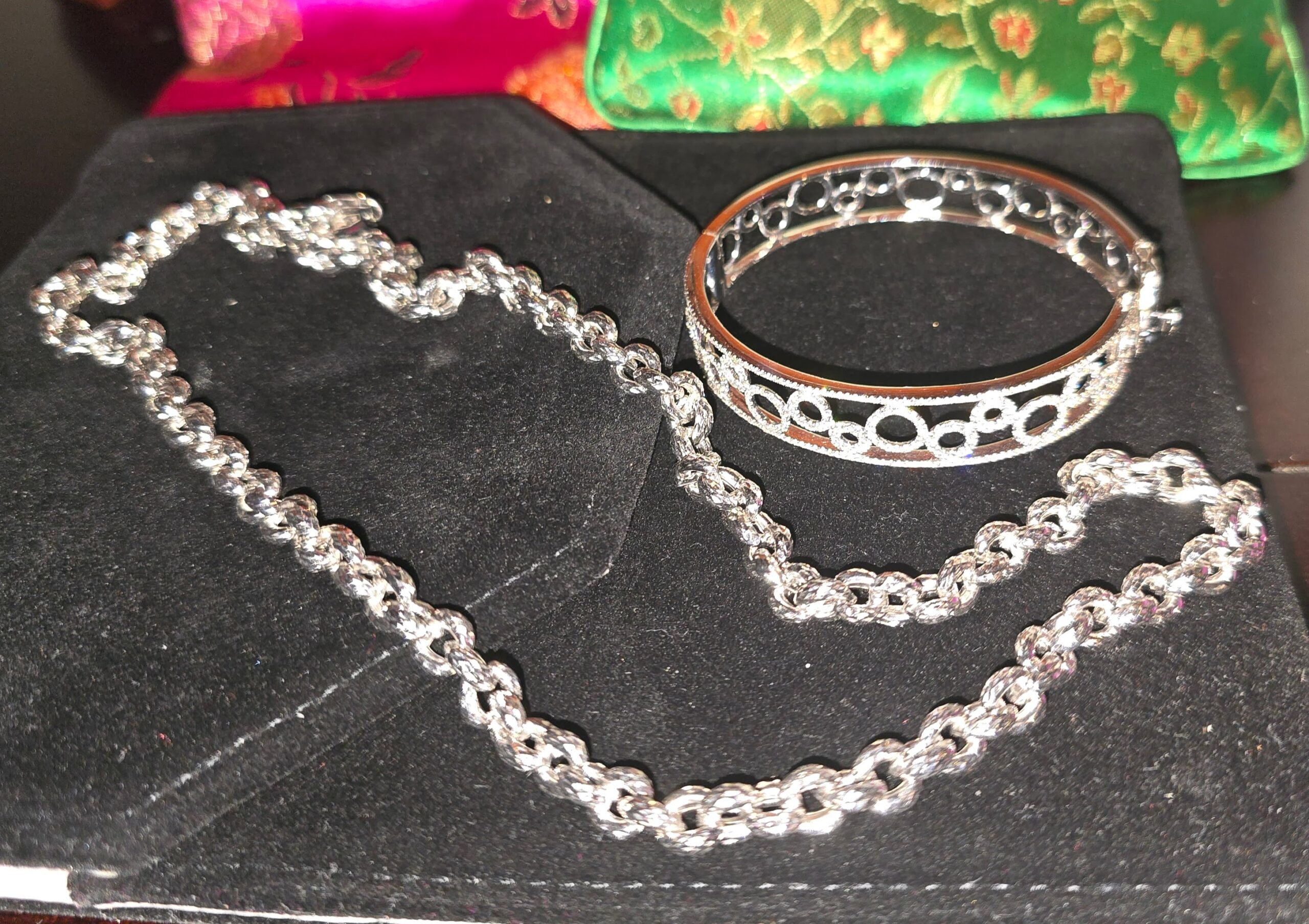
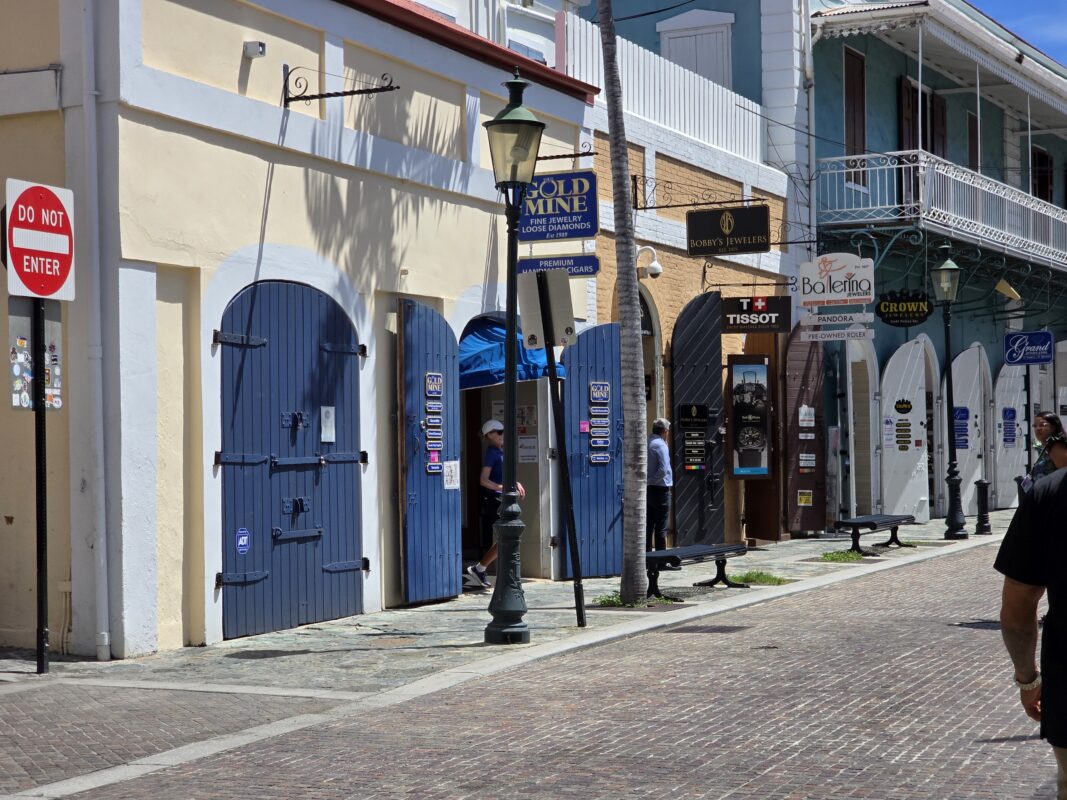
My friend is what you’d call an expert jewelry buyer. She shops for fine jewelry at high-end stores across the U.S. and around the world (e.g., Cartier, Bulgari, etc.). She knows quality and pricing, and she negotiates without hesitation. For over 20 years, she’s returned to the same family-owned shop in St. Thomas: Ballerina Jewelry in Charlotte Amalie.
Why does she keep going back? Because the value holds up against anything she finds stateside. That’s not tourist hype. That’s a discerning shopper voting with her wallet, year after year.
Why is Jewelry Cheaper in the Caribbean? The Tax Mechanics Behind the Lower Prices
Caribbean jewelry can be cheaper for two main reasons:
- No import duties (in many cases). When jewelry enters the Caribbean for sale, it may avoid some of the import/export tariffs that would be applied in the U.S. Those costs can get built into mainland retail prices, while Caribbean shops don’t always carry that same markup.
- No sales tax. While you’d pay 5% to 10% sales tax at a mainland jeweler (depending on your state), many Caribbean purchases in designated shopping areas come tax-free at the register.
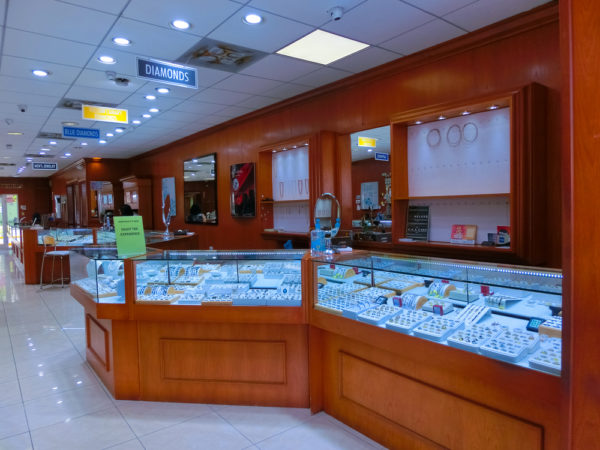
Combined, these advantages can add up. For example, if you’d pay 8% sales tax at home, a $3,000 watch would cost you an extra $240 in tax alone. If you buy a similar piece in a Caribbean port with no local sales tax and stay within your duty-free allowance, that $240 stays in your pocket. And that’s before you factor in any store discounts or price negotiations.
Duty-Free vs. Tax-Free: What’s the Difference?
Most shoppers use “duty-free” and “tax-free” interchangeably, but they refer to two different things.
Duty-free usually refers to items sold without import or export duties being charged when goods enter a country or territory.
Tax-free usually refers to not paying local sales tax or value-added tax at the register.
On a Caribbean cruise or island trip, you may benefit from both: the store’s ability to sell certain goods duty-free and the island’s policy of not charging local sales tax to international visitors in designated shopping areas.
The USVI Bonus
Shopping in St. Thomas comes with an extra perk. Under U.S. Customs rules, travelers returning from the U.S. Virgin Islands get a $1,600 duty-free allowance. That’s double the $800 limit for other international destinations. Families can pool their allowances, so a group of 4 could bring back $6,400 worth of jewelry without paying additional duty.
Important note: This higher allowance applies specifically to the USVI (St. Thomas, St. John, St. Croix). Other Caribbean islands follow the standard $800 rule.


Are Some Caribbean Islands Better for Jewelry Shopping?
You can browse jewelry in almost every Caribbean port, but a few islands are especially known for selection and competition on price.
St. Thomas, U.S. Virgin Islands
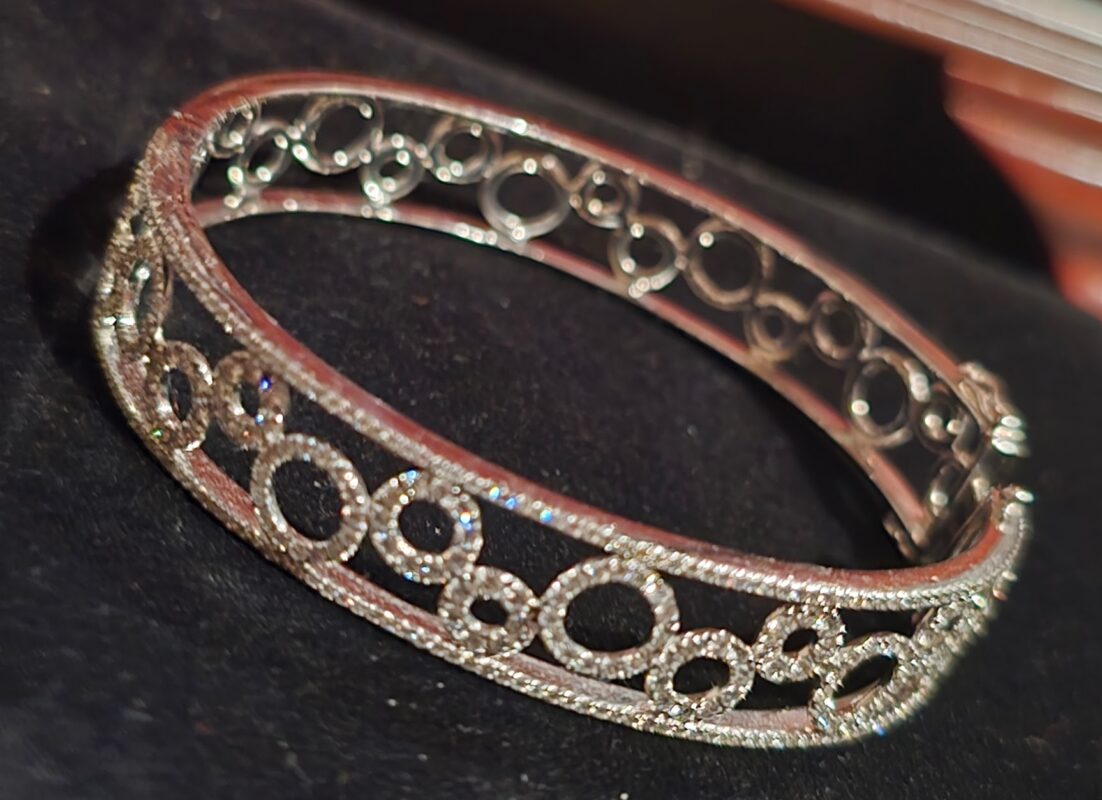
St. Thomas is the classic jewelry hub. Charlotte Amalie and the nearby cruise areas have many jewelers in a compact area, making comparison shopping easier. Combined with the higher U.S. duty-free allowance for the USVI, it can be one of the strongest options for traditional fine jewelry and watches.
St. Maarten
Philipsburg on the Dutch side of St. Maarten is another major stop for diamonds and watches. Front Street has a high concentration of stores that serve cruise passengers, so you will usually find a wide range of styles and prices within a short walk of the pier.
Nassau, Bahamas
Nassau offers a mix of global brands and local jewelers close to the cruise terminal. It is a good choice if you want to see both higher-end names and more moderately priced pieces without going far from the ship.
Other Ports and Local Finds
In ports such as Bridgetown or those in the Dominican Republic, the focus may be less on big-brand showrooms and more on locally inspired designs. If you are looking for a distinctive reminder of your trip, local artisans and regionally styled pieces in these ports are often worth seeking out.
Why Selection Matters Too
Price isn’t the only advantage. Caribbean jewelry stores often carry deeper inventory than mainland shops. They serve customers from around the world with different tastes and budgets, so they stock a variety you won’t likely find in a single U.S. store. What takes a mall’s worth of jewelers to assemble at home might fill one shop in Charlotte Amalie.
Family-owned stores that have served the same customers for years also tend to offer better service. They remember what you bought last time. They know your taste. And they want you back.

Do Your Homework Before You Shop
The biggest price advantage comes when you know exactly what you are comparing. A little preparation at home goes a long way.
- Check real prices first. Look up specific pieces or similar items at reputable jewelers near you or on official brand websites. Make a note of typical prices, not just “sale” tags.
- Know your priorities. Decide whether you care most about brand, stone quality, design, or overall budget. That makes it easier to walk away from something that looks exciting in the moment but does not actually fit what you want.
- Research jewelers in your ports. Search for reviews of shops in ports like St. Thomas, St. Maarten, and Nassau. Pay attention to comments about service, return policies, and how issues were handled after the sale.
- Treat ship recommendations as a starting point. Cruise-line seminars and “recommended store” lists can give you names to start with, but they are also part of the marketing ecosystem. Use them as one source of information, not your only guide.
Negotiation: Where Extra Savings Come From
Unlike most mainland jewelry stores, many Caribbean shops expect a bit of back-and-forth on price. The sticker price is often a starting point, not the final number.
If you’re comfortable asking for a better deal (or you’re traveling with someone who is), you may be able to save beyond the built-in tax advantages. Repeat customers who build relationships with specific shops often get the best treatment, including better pricing and upgrade options.
Negotiation usually works best at independent, family-owned stores rather than large chain outlets right at the cruise terminal. Those smaller shops generally have more flexibility and a stronger incentive to earn your repeat business.
Be Forewarned: Know the Limits
The duty-free allowance isn’t unlimited. Exceed $1,600 from the USVI (or $800 elsewhere), and you’ll owe duty on everything above that threshold. Keep receipts. Declare all purchases at customs. Family members traveling together should designate one person to declare for the group.
Also worth keeping in mind: lower prices don’t mean low quality. You’re buying the same fine jewelry you’d find at home, just without the tax and duty markup baked in.
Customs rules and duty-free allowances can change, so it’s always worth checking the latest guidance from U.S. Customs and Border Protection before you travel.
Frequently Asked Questions (FAQs)
Is The Caribbean A Good Place To Buy Diamonds?
Yes, the Caribbean can be a good place to buy diamonds, especially in ports like St. Thomas, St. Maarten, and Nassau, where there is strong competition and a lot of inventory. The potential savings usually come from lower local taxes and duty allowances, not from lower quality standards. That said, the same rules apply as at home. Know what you want, compare prices with a reputable jeweler at home, and ask for proper documentation.
Is The Caribbean A Good Place To Buy Watches?
Yes, the Caribbean can be a good place to buy watches, especially in ports like St. Thomas, St. Maarten, and Nassau where you will often find several authorized dealers close together. The main advantages are potential savings on local taxes and the ability to compare models and prices across multiple stores in a short amount of time.
The key is to buy from reputable retailers. Confirm that the shop is an authorized dealer for the brand, ask about the manufacturer’s warranty, and make sure you understand the return or service policy once you are back home. If a price is far below what you see on official brand sites or from trusted retailers, take a moment to ask questions before you commit.
Is Jewelry Cheaper in St. Thomas Than Other Caribbean Islands?
Yes, jewelry in St. Thomas can often be cheaper than in many other Caribbean ports, but it is not guaranteed for every piece or every store. St. Thomas combines a higher U.S. duty-free allowance for the U.S. Virgin Islands with a large number of competing jewelers in a small area, which can work in your favor when you compare prices. That said, you still need to check what similar pieces cost at home, compare a few shops in port, and focus on reputable retailers. The best value comes when the price, documentation, and return policies all line up, not just when a tag looks low.
Is Jewelry Cheaper In St. Maarten?
Yes, jewelry in St. Maarten can be cheaper than at home, especially in Philipsburg along Front Street where many jewelers compete for cruise traffic. The island promotes tax-free shopping for visitors in designated areas, so you are not paying local sales tax on top of the price.
Savings are not automatic, though. Check what similar pieces cost at home, compare a few stores in port, and buy only from shops with clear documentation, authentic brands, and a written return or exchange policy.
Closing Thoughts
Caribbean jewelry prices can be genuinely lower because you skip import duties and sales tax. In the US Virgin Islands, you also receive a higher duty allowance, allowing you to bring more home without a tax surcharge. The best deals come from building relationships with trusted shops rather than buying from the first store off the ship.
Before your trip, price the items you want at home. That way, you’ll recognize real value when you see it.

Elaine Warren
Founder & Crew Chief
Elaine founded this website after publishing the book The Family Cruise Companion’s Guide to Cruising With Kids. (Second edition recently released!) She has sailed on 45 cruises (and counting). She loves helping families navigate their way to an adventure-filled, fun, and memorable vacation.